One of the fiercest voguers out in the UK right now, I interviewed David Magnifique for the FACT Mag history of UK voguing piece I wrote earlier this year. I said I would publish his questions in full, so here they are, to kick things of as part one in a series of interviews with some of London's top upcoming children.Consider this an introduction to Vogue London:
How did you discover voguing?
I always knew about the dance form Voguing, I have to admit that
my first encounter of this dance style was through Madonna's music
video "Vogue". But due to family religious values I was forbidden to
have anything to do with
the dance style so it then became something of a faded memory or even
part of my subconscious, but growing up there was always some kind of
reference/gesture made to it because of my feminine mannerisms or my
fierce fashion sense. It was not until early 2011
I was introduced to the London dance scene by a friend that I came
across Vogue dancing again, this time in the flesh; at least I thought
what I witnessed was voguing (by this time I was out of the closet and
proud). I began asking for training sessions and
I was told that the dance style I was learning was called Waacking, I
had no clue that there was a difference and felt a little embarrassed.
From then I decided to research the dance style, its history and
culture, i immediately realised that Waacking was
definitely not for me and that Voguing had my name all over it; it came
so natural to me. I noticed that there was little to none of vogue
dancers whenever I went out to clubs, dance nights, even vogue nights so
I knew for sure that I wanted to be at my best
and known for being a legit voguer wherever I went. I studied and
trained hard almost 24/7. I have been voguing since April 2011.
Who have you learned under? Are there many other people voguing in London?
With regards to my learning and training I have not really been
under anyone. My learning and training came from studying videos on
YouTube, reading material, contacting and chatting to several Iconic,
Legendary voguers such as
Muhammad Omni, Dashaun Lanvin and my House Mother Princess Magnifique
Royalty for guidance and background history. When studying videos I
made it a priority to study the original children from the 80's-90's,
because I wanted to show and reflect the original
art form and vocabulary of the dance style. There is not many of us in
the London scene that truly vogue down, but of what I do know there is
only a handful of us maybe 6-8 being male and female.
What are your favourite clubs to vogue at?
One of my favourite clubs to vogue down a is called Madame JoJo's
in Piccadilly, Soho. This club has always felt like a second home to me,
this was in fact the club I first got a chance to vogue. My second
favourite is a club called Birthdays, but only
because a night called House Of Trax is held there almost every month
and they play an amazing selection of vogue tracks and hold Vogue
Nights, of course I get down like crazy to. A big thank you to the
organiser of the club night Matthew Thomas. But then
again, whatever club you see me in you will find me voguing down to the
ground getting my life!
What are your thoughts, if any, on the UK vogue scene?
To be honest it is
rather small and scattered. But a few of us in London try
to keep in contact with each other and keep each other in the loop and
even train together. If ever the Vogue Scene
in the UK/London was to take off and spread like wildfire butter I
would like to hope and think that I have a huge influence and part to
play in it and take my House [Legendary, Royal House Of Magnifique] and its name far, because to me voguing is not just
a dance style, it is a culture, a community, a lifestyle.
Showing posts with label vogue. Show all posts
Monday, 1 December 2014
Saturday, 2 August 2014
CHOW DOWN w/ MIKEQ & CVNT TRAXXX Aug 9th, Soup Kitchen, Mcr
ARGH!! Playing with the Legend that is MIKEQ next week - the first time a true ballroom star has djed in our city. Pros to CHOW DOWN for bringing him up and booking me to support!
Labels:
ballroom,
Chow Down,
CVNT TR4XXX,
dj set,
Manchester,
MIkeQ,
vogue
Thursday, 1 May 2014
RBMA Bounce Ballroom Event TONITE
Oh ot be in New York! Check out this fucking line-up - brilliant mix of house music styles and the associiated dance scenes. From the RBMA site:
Four dance styles, four dance crews, four DJs: Bruk Up/Flexing with Bobby Konders, Voguing/Ballroom with MikeQ, Housing/Waacking with Todd Terry, Jersey Club with DJ Sliink. In the tradition of our 2013 United States of Bass event, Red Bull Music Academy pays tribute to hyper-local traditions that have made a global impact. With revered jocks providing the soundtrack and legendary dancers teaching you all the moves, expect a history lesson that your booty will never forget.Here's the promo mix:
BRUK UP with Bobby Konders + dancers Bones the Machine, Drew Dollaz, Samiam, Ghost.
VOGUING with DJ MikeQ and MC Kevin JZ Prodigy + dancers Javier Ninja, Leiomy Prodigy and Dashaun Evisu.
HOUSING with Todd Terry + dancers Eriko, Cricket, Princess Lockeroo.
JERSEY CLUB with DJ Sliink and Mike Gip + dancers SoSo, Fiinesse and Emanni.
Lighting installations by Nuit Blanche New York (NBNY).
For an overview of all Red Bull Music Academy Festival New York events, as well as info on ticketing, visit: http://www.redbullmusicacademy.com/nyc
Saturday, 12 April 2014
BOYFRIENDS Vogue mix
This is awesome!! Big shout to Saul Mojca or this killer mix:
Intro
RuPaul - Covergirl (Boyfriends Ratchet Ass Donkey Booty Remix)
Robbie Tronco vs. Trina - C.U.N.T. (Boyfriends Red Bottoms Edit)
GTA - Booty Bounce
2 Chainz - Birthday (Boyfriends DJ Snake Vogue Edit)
Azealia Banks - 212 (Boyfriends RUIN YOU CUNT Remix)
GTA - Hit It (Boyfriends VOGUE Edit)
Tony Quattro - Ray Ray
Chelley - Took The Night (DJ Sliink Remix)
Red Foxx - Silly Bitch
Melocah - Lola
French Fries - Yo Vogue
B. Ames - The Bump
Versace Spice - Versace Hottie
Doortrax - Presto Change-o
Sugur Shane - Buddah vs. Sugar
Madonna - Vogue (Boyfriends Remix)
Dai Burger - Big Boob Bitch
Submission - Women Beat Their Men
M.I.A. - Y.A.L.A. (MikeQ Bootleg)
GTA - The Crowd
Lady Gaga - Aura (Boyfriends KILLED THE VOGUE Remix)
Calvin Harris ft. Ellie Goulding - I Need Your Love (Boyfriends Remix)
Cathy Dennis - Touch Me (Vices Remix)
Drunk In Love vs. Boss Ass Bitch (Byrell The Great Remix)
DJ Funeral - Shutterbug
Intro
RuPaul - Covergirl (Boyfriends Ratchet Ass Donkey Booty Remix)
Robbie Tronco vs. Trina - C.U.N.T. (Boyfriends Red Bottoms Edit)
GTA - Booty Bounce
2 Chainz - Birthday (Boyfriends DJ Snake Vogue Edit)
Azealia Banks - 212 (Boyfriends RUIN YOU CUNT Remix)
GTA - Hit It (Boyfriends VOGUE Edit)
Tony Quattro - Ray Ray
Chelley - Took The Night (DJ Sliink Remix)
Red Foxx - Silly Bitch
Melocah - Lola
French Fries - Yo Vogue
B. Ames - The Bump
Versace Spice - Versace Hottie
Doortrax - Presto Change-o
Sugur Shane - Buddah vs. Sugar
Madonna - Vogue (Boyfriends Remix)
Dai Burger - Big Boob Bitch
Submission - Women Beat Their Men
M.I.A. - Y.A.L.A. (MikeQ Bootleg)
GTA - The Crowd
Lady Gaga - Aura (Boyfriends KILLED THE VOGUE Remix)
Calvin Harris ft. Ellie Goulding - I Need Your Love (Boyfriends Remix)
Cathy Dennis - Touch Me (Vices Remix)
Drunk In Love vs. Boss Ass Bitch (Byrell The Great Remix)
DJ Funeral - Shutterbug
Monday, 7 April 2014
Night Slugs x Fade To Mind pres ICY LAKE
Props to Fade To Mind and Night Slugs for digging out this gem - a lost tibal house jam from the mid/late 90s that Juniour Vasquez would play at the Palladium, as a call for the New Way voguers to get out on the floor. The track itself sounds like it could have been made yesterday, and it's pretty obscure - Vjuan Allure didn't know it, but Aviance Milan testified to it being a vogue anthem at the Palladium.
Here's a lil film made by the labels about the track's making and legacy:
Labels:
Fade To Mind,
house,
Icy Lake,
New Way,
Night Slugs,
vogue
Friday, 7 March 2014
BigDickBitch aka TS MADISON interview *NSFW*
The name TS Madison might not ring your bells, but if you're on Vine (or know anyone who is) then it's very likely that you have seen her videos. Madison, aka BigDickBitch, is the star of the viral hit "She Got A Dick!!!" in which she coins a catchphrase while showing the world her very generous apendage. Here's the clip, censored, and it's still VERY NSFW:
LOVE LOVE LOVE IT! I sent Madison some questions, which she was kind enough to answer:
Who Is TS Madison?
Ts Madison is that girl and who does her hair... lol, just kidding. Seriously TS Madison is a brand, a business mogul, and she's an entertainer. A transgender woman with limitless skills and abilities who stands for equality for all people, no matter race, color, creed and most importantly sexual orientation and gender.
B Ames is one of my favorite producers, her beats always turn me out. How did you hook up with her?
B Ames reached out to me as a fan and supporter of the TS Madison movement and, when she did, it was instant chemistry as if we had known each other for years. We traded ideas and knew that we wanted to do something big for the community. We wanted to rewrite the alma mater for confidence and self esteem.
The track you have done together is SICK. I love it! What was the inspiration behind "Is It On?"
The phrase "Is It On" originally was used before I did every vlog to express my feelings and views on current events, but it was really referring to my mug and how pretty I looked in the camera! My religious followers understood that I was talking about my mug and related to it. B Ames saw that quote and knew that we could make this a high-energy, self-esteem boosting song.
And what was it like working with B Ames?
She was wonderful, amazing and she listened and we were able to brainstorm this genius.
Have you made music before or is this your first time?
Yes I have made music before, but this time was different because this time I saw this as original and something that would make an impact on the community.
Your clips are notorious, and also very funny. What has the reaction been like to them? I am guessing it has been both good and bad?
The reactions have been varied in both negative and positive reviews, but either way it goes it has put my name out in mainstream society and has allowed me to expand my brand. Allowing my positive energy to touch masses of people.
What made you put the naked clips up in the first place?
My initial occupation was an adult film star and producer so I utilized social media as any business minded person would do for a marketing strategy. Countless others were doing the same before me. I had no idea that MINE would go viral.
Will there be more naked clips?
Ummmmmm... Honestly I dont know just stay tuned!
You've got quite a reputation on Vine now. How does it feel to be one of the first "stars" of Vine?
"Star" that's a complicated word and so complex and I am just TS Madison. I have a lot to say but I just say it a little louder. But I am just like everyone else.
I am loving your hair right now too - if money was no option what would be your dream weave?
My dream weave always has to start out 22 inches, honey, because you do know that "if it aint 22 inches or better your practically baldheaded". Seeing how my hair is always custom made by AAA QualityRemy hair it seems I always live wearing my "Dream Hair".
You can buy "Is It On?" on iTunes.
Thursday, 6 February 2014
"Year In Vogue" mix for FACT Magazine
It's up! The hour-long mix of my favourite ballroom (with a smattering of club and house) from the last 12 months (roughly). Full tracklist below.
DESHAUN TIMOTHY & SUGUR SHANE - Ima Read (Divoli 2013 Mix)
SUGUR SHANE - CT Drops
VJUAN ALLURE - Kid Conga (Rebounced) ft Danial Haaksman
MYRRYRS - Memphis
RUSHMORE - Turn It Up
KEVIN JZ PRODIGY - Nasty Poetry (Schwarz Remix)
POISONOUS RELATIONSHIP - Nite Birds (MikeQ Remix)
MIA - Y.A.L.A. (MikeQ Remix)
BYRELL THE GREAT - #TwerkIt
LULU EBONY & GREGG EVISU - Bangee Cunt (DJ Delish Remix)
HYPEHEADS - Tom Landry (Ynfynyt Scrol Godless Bisexual ReQynt)
SHARAYA J - Banji (CVNT Bitch Edit)
BEEK - Like This (Like That)
TONY PLAYBOI - Space Walk Runway
AIR DJ - Britney Puta
BRITNEY SPEARS - Werk Bitch (Divoli S'Vere Gaginator Mix)
BRITNEY SPEARS - Werk Bitch (Divoli S'Vere Gaginating Ha)
JAY R NEUTRON - YUNGNEUTRXN
VJUAN ALLURE - Natives R Restless
DJ SEGA - Django (Demo)
SCHWARZ - My Pussy Tastes Like…
SUGUR SHANE - Outta Sight Cunt Juice
THOMAS BANGALTER v L-VIS 1990 - Spinal Ha
B AMES - Sniffles (The Bump Dub)
ANGEL X - Electro Runway Pump
MATRIXXMAN & MYKKI BLANCO - God Created The Beat (JD Twitch Remix)
BODYJACK - The Widowmaker
CVNT aka CVNT TR4XXX - Midnight Function
HOUSE OF WALLENBERG ft OCTAVIA ST LAURENT - Be Somebody (CVNT TR4XXX Remix)
NEW YORK TRANSIT AUTHORITY - A Long Time Coming
JAY EXCLUSIVE & VJUAN ALLURE - Any Bitch
DESHAUN TIMOTHY & SUGUR SHANE - Ima Read (Divoli 2013 Mix)
SUGUR SHANE - CT Drops
VJUAN ALLURE - Kid Conga (Rebounced) ft Danial Haaksman
MYRRYRS - Memphis
RUSHMORE - Turn It Up
KEVIN JZ PRODIGY - Nasty Poetry (Schwarz Remix)
POISONOUS RELATIONSHIP - Nite Birds (MikeQ Remix)
MIA - Y.A.L.A. (MikeQ Remix)
BYRELL THE GREAT - #TwerkIt
LULU EBONY & GREGG EVISU - Bangee Cunt (DJ Delish Remix)
HYPEHEADS - Tom Landry (Ynfynyt Scrol Godless Bisexual ReQynt)
SHARAYA J - Banji (CVNT Bitch Edit)
BEEK - Like This (Like That)
TONY PLAYBOI - Space Walk Runway
AIR DJ - Britney Puta
BRITNEY SPEARS - Werk Bitch (Divoli S'Vere Gaginator Mix)
BRITNEY SPEARS - Werk Bitch (Divoli S'Vere Gaginating Ha)
JAY R NEUTRON - YUNGNEUTRXN
VJUAN ALLURE - Natives R Restless
DJ SEGA - Django (Demo)
SCHWARZ - My Pussy Tastes Like…
SUGUR SHANE - Outta Sight Cunt Juice
THOMAS BANGALTER v L-VIS 1990 - Spinal Ha
B AMES - Sniffles (The Bump Dub)
ANGEL X - Electro Runway Pump
MATRIXXMAN & MYKKI BLANCO - God Created The Beat (JD Twitch Remix)
BODYJACK - The Widowmaker
CVNT aka CVNT TR4XXX - Midnight Function
HOUSE OF WALLENBERG ft OCTAVIA ST LAURENT - Be Somebody (CVNT TR4XXX Remix)
NEW YORK TRANSIT AUTHORITY - A Long Time Coming
JAY EXCLUSIVE & VJUAN ALLURE - Any Bitch
Monday, 30 September 2013
Wednesday, 25 September 2013
CVNT Statement EP test pressings
Tuesday, 3 September 2013
MVSCHI En Vogue promo vid
DJing at this on Friday with MikeQ, Vjuan Allure and MC Jack Mizrahi:
Labels:
ballroom,
CVNT,
dj set,
house,
Jack Mizrahi,
MIkeQ,
Muschi,
MVSCHI En Vogue,
Vjuan Allure,
vogue
Monday, 2 September 2013
Friday, 30 August 2013
DJ SPRINKLES in-depth interview part 3
And so we come to the final part of CVNTY's epic interview with Terre Thaemlitz aka DJ SPRINKLES; artist, lecturer, highly respected deep house producer, and someone with more than just a passing interest in trans*/queer/gender issues. In this part of our epic sit-down, courtesy of the kind folks at Arika in Glasgow, we talk about Terre's history in activism, more on the difference between political organisation and activism (especially in relation to being trans*), how Terre got her start in the world of voguing and ballrom in early 90s New York, and the complex effects of "Paris Is Burning" and Madonna's "Vogue" on that world and its people:
I think we agree in that we recognise that there is a political element to everything, but I feel "activists" can often come across as quite patronising...
Sprinkles in action at Arika Episode 5, Glasgow, photo by Michael James
I think we agree in that we recognise that there is a political element to everything, but I feel "activists" can often come across as quite patronising...
Well
part of that is because most people don't want to hear another person
telling them how to live, and if the thing they are being told is not
something they are personally invested in, it becomes just one more
cultural demand. Most cultural commands are coming down from a position
of domination, but I think people find it easy to mis-direct anger at
activists because everyone is already so beaten down and alienated from
each other under capitalism. Any self-conscious social organizing
initially registers as annoying, because we are conditioned to respond
to it as inappropriate and anti-social. This is all assuming we're
talking about left-wing activists we would hypothetically like to
embrace, as opposed to right wing radicals whom I think are patronizing
in completely different ways via their amplification of mainstream
cultural dominations. I think, again, it comes down to an inability to
distinguish what is political organising versus activism. Organising
does not always mean sitting on a committee in a room inventing rules
and protocols. It could also be as familiar and seemingly innocuous as
the structuring of lives within familial units. These are also political
organisations. Constructing "family" is one of the most common
organisational frameworks in the Ball scene, right? So, how do we learn
to fathom all the seemingly innocuous aspects of our lives as forms of
political organisation? If people can get in touch with that, then I
think a lot of the "anti-activist" resistance to political engagement
fades away because we realise political engagement is not just some
external imposition by others. It's something we are doing, hearing,
speaking and teaching all the time within daily life - often
unwittingly. So that's what I would offer to someone who feels that
frustration [with political activism].
I
think genderfuck is a good example of that because I don't fell like
it's overtly political, but I think the act itself is political because
it is going against society's dominant, patriarchal ideas of gender. To
me it seems like a very simple, direct way of doing something political
without having a bullhorn.
Actually
I am shocked that you are phrasing it as not overtly political, because
from my own experiences, it effects not just how people react to you on
the street, it effects your ability to get work, it effects your
ability to even buy things when people refuse to serve you…
What
I mean is not that it isn't political, as of course it is, it effects
every aspect of your life. But what I am trying to articulate is that it
doesn't fit into people's perceived notions of what "politics" is,
which, as you mentioned, is people in suits, talking down to you,
telling you how to live…
Well,
maybe also because people perceive it as perversion, and therefore a
personal choice. Within the public/private sphere that we have
constructed so well around ourselves, this notion of choice is
supposedly the indicator of freedom and de-politicised motion -
basically, the opposite of activism. I think genderfuck doesn't register
as traditional "politics" because it is seen as our "choice" to do
genderfuck, simultaneously announcing and inhibiting our free movement
within public spaces. As an action, it blurs the lines between "public"
engagement and the perhaps shameful disclosure of something usually kept
"private." I mean, most people think of "public spaces" as a forum for
the political, whereas what happens in our bedrooms is considered
private, "fuck you, it's my business and you have no say here." But in
fact what happens in my bedroom IS directly related to what is not
socially able to happen elsewhere. Much as the politics of the public
fill private spaces, genderfuck seems to bring the politics of the
private into the public. So yeah, there is that whole public/private
thing of seeing genderfuck or certain other forms of transgenderism in
relation to perversions, choices, illnesses to be treated, etc. - not
standard political disourse. Of course, the minute we say these things
we realise we cannot separate them from real material struggles. It's
impossible. Especially when you are talking about perversion and
illness. These are morally and politically laden terms.
Right,
we have been talking for over half an hour and we haven't discussed
voguing or your roots in New York! I should probably start by asking how
you got into that whole world? How did you discover voguing and
ballroom?
Ok,
well I was doing activist work in NY in the late 80s. I guess it was
around 1988 that I did a mix tape for the API contingent of the Gay
Pride parade (API stands for Asian Pacific Islander, my partner at the
time was one of the founders of the API Caucus at ACT-UP). I started
DJ-ing at benefit events, and out of that, I started getting DJ gigs. I
got a DJ residency at Sally's - actually Sally's II - which was a
notorious midtown sex workers club at the Carter Hotel on 43rd St. It
was a really different scene from the [East] Village, from the 'art
queen' type of scene. Sally's was a place where there were sometimes
balls, but mainly I worked two nights a week with Dorian Corey, and
another night was with Miss Sherry from Las Vegas. So that was such an
amazing thing - to be so young, in my early 20s, and working with these
icons… I mean Dorian Corey [star of "Paris Is Burning"]… she really
stood up to her legend! But because Sally's was very much a "post-op"
scene, and Dorian and a few others were in their 60s (there were many
first wave transexuals around), I also had a lot of early exposure to
people in all different stages of life and transition. Not just people
who were young and good looking and had the right surgeons, but also
people who had been living for decades with implants. Of course, a lot
of things are done on tight budgets and go wrong, so this is when I also
came to conclusions on my own that I would remain "non-op". Based on
not only the economic suffering I saw people getting themselves into,
which is really like mortgaging a house (and a lot of the girls were
homeless), but also just the general health difficulties I saw people
getting into. I saw the different effects of aging on transitional
procedures, that I think a lot of people don't see. And heard a lot of
stories of health troubles from girls whose treatments had lapsed or
were sporadic for years at a time, due to a lack of finances and health
insurance. Although I worked full-time during the day as a secretary, I
also had no confidence in the financial security of my own future, so it
was a really intense experience for me, at a point when I really needed
to make certain decisions about the course of my own life.
How long were you at Sally's?
I
was DJ-ing there between 1991 and 1992, but it was probably around a
six or seven month span. I got the Sally's II Grammy for Best DJ in 1991
in January or February of 1992, and then a month later I was fired
because I refused to play a Gloria Estefan record! This was because it
was requested by a big-cash John. So, Sally pulled me aside and said to
me, "You gotta start playing Madonna and the Pet Shop Boys, and more of
that stuff". At the time I was only playing underground house from New
Jersey and the Lower East Side, mostly instrumental stuff, so I said
"No, I''m not gonna play it," and she said "Well I'm gonna have to let
you go". I mentioned that only a month earlier I had gotten the
underground Grammy, so I couldn't be doing that bad, and she said,
"Well, the girls voted you best DJ, but the Johns pay the bills." And
that right there sums up a lot of my scepticism about how certain parts
of ball and vogue scenes preach that it's all about acknowledgement and
visibility and being named and breaking through. I mean, for me as a
transgendered person, what better acknowledgement could I have had than
being voted Best DJ by the girls themselves? Yet the Mother of the House
Of Magic herself, Sally Maggio, then almost immediately turned around
and invalidated that acknowledgement from the girls. Those two
conflicting dynamics are tied up in the award. And that's why I hype it
up on my website still, not because it is the symbol of some great
achievement - which I realize is how most people will simplistically
perceive it. For sure, mentioning the award after it was basically
invalidated is like a "fuck you", ha ha! But in many ways it symbolizes
the complete opposite - hypocrisy and even shame. At the same time, for
those who understand the nuances of those kinds of situations, I don't
want that "invalidated" initial meaning to be totally erased. It's very
bittersweet. So yeah, the real reason I bring that story up is because
it represents my concerns about how most people rely on representational
strategies whose value systems are almost exclusively rooted in
acquisition and visibility. Of course, the ball scene has a very long
history with problems of exploitation, mis-representation and
commodification, and those abuses are interwoven with very deeply rooted
desires for acceptance, acknowledgement and visibility. The general
tendency is to maintain face, and identify those problems as solely
coming from without. But, through the internalization of violence, those
problems are also part of the very practices through which the ball
scene self-organizes. That award story kind of sums up the hypocrisies I
think many people are struggling with in the ball community.
That's interesting, because the period you were djing at Sally's would have been around the time "Paris Is Burning" came out?
Just after, I think.
That
film has a very mixed history: on the one hand it is a huge amount of
people's introduction to this whole world of houses and voguing, but
also a lot of people say it only shows you a very small aspect of this
world, and it's not doing it full justice. Did you see any of that in
your time at Sally's?
I
think one of the problems of how people deal with representational
issues within house communities (also, of course, within histories of
racial and gender discrimination) is that it's easy to slip into a
belief that representation can occur in an unbiased and fair way. Of
course, every representation is a deception, and who should know that
more than drag queens? So did I see it? Yeah of course I did, and at the
same time I was actively arguing with queens who wanted me to play
"Vogue" every night. It wasn't as though the scene as a whole had its
shit together and knew all the problems with "Paris Is Burning" and
Madonna's "Vogue" or whatever. There were people who were on the ball
with that stuff, and I'd like to think that I was maybe one of them. But
at the same time, there were a lot of people who really wanted to
participate in that pop moment and celebrate it, simply because any
visibility registered as good visibility. It's a kind of juvenile fandom
fantasy, you know? So, in any representation of ball scenes, the
question then becomes, "how does one really map and represent complexly
overlapping communities that deploy languages of authenticity?" That
authenticity can be tied to what kind of transgendered person you are,
for example post-op realness versus butch queen realness versus a total
train wreck person like myself. And, of course, authenticity in relation
to issues of race, of class, etc. So, if that is the kind of language
that's going on (and this was in the 80s and 90s, when identity politics
with an essentialist twinge was in its heyday) how does one actually
represent more complex relationships of community? And even myself,
being someone who is White in a Latina and African-American club - if
you want to boil everything down to essentialist race relations, what
the fuck was I doing there, right? Well clearly that is not a very
nuanced way to understand social relationships that bring people - even
unexpected people - into specific spaces. It leaves you speaking of
identity as a claim to territory, rather than speaking of social
movement, interaction, organization, domination and violence. So I think
unless you enter very precise conversations about why particular things
failed or succeeded in terms of media representations, then the
boundaries of that conversation becomes too broad and fall into
sweepingly essentialist categories.
Terre Thaemlitz "Meditation on Wage Labor and the Death of the Album" (Sprinkles' Unpaid Overtime)
Find out more about Sprinkles/Terre (and buy her music!) at Comatonse Recordings.
Much thanks to Barry, Bryony, everyone at Arika!
Friday, 23 August 2013
The QWEEN BEAT interviews pt 2: BYRELL The GREAT
It's PART TWO of the CVNTY Qween Beat interviews special, and this time we catch up with the producer/beatmaker BYRELL THE GREAT, who may be relatively new but is making quite an impression. You should definitely check out his new mixtape "In Great We Tru$t Pt II: The Understanding" on vibedeck (which unfortunately I can embed here)
Who is BYRELLtheGREAT?
BYRELLtheGREAT is the top leading DJ in the kiki ballroom scene (getting into it only a year ago) along side his Qween Beat founder MikeQ. He is also an upcoming producer in the ballroom scene as well as doing side works in the genres of Hip-Hop, Dancehall, and Trap.
How do you describe what you do?
What I do varies. One day you'll get a track from me that is dramatic and another day you'll get something that has more of a soft and cunt feel to it. Either way, my tunes are going to make you feel it deep down inside.
How did you get involved with the whole ballroom scene?
I started off doing mixes for dance groups, cheerleading squads, drag performers, artist, and many more. In mid 2012 my gay mother asked me to DJ her ball. She knew it was something I wanted to try but never had the chance to. That day started my Ballroom Dj journey.
Earlier that year, my friend Gia said to me you should make a beat-which she gave me the concept for and all- and that day started Byrell the producer.
And what do you think of the ballroom scene now in 2013?
Nothing like what it used to be but still very similar. I think the elegance and grace of the performers are nothing like what it used to be. To me, the newer generations are definitely losing the art of it all.
Can you explain for our readers the different types of "MCing" used in ballroom, and how these are different and might have developed?
The Mc'ing definitely grows and changes with the times. If you look at Paris is Burning, the MC's were more calm, and elegant on the mic's yet shady. Today the MC's are more hype and rowdy on the mic's. This changed when the voguing got more hyper/ up tempo.
How did you arrive at your own production style?
Well coming from an under ground dance scene where theme, and mixing music, is very big to us; I believe that helped me develop my own style but still keeping the influence of original ballroom.
Who has been the biggest influence on you as a producer?
The music I love definitely! I always look to the things I love for inspiration. Also, Vjuan Allure is a big influence to me as far as making vogue beats. I think every ballroom producers can say they looked up to him because of the way he changed it all.
What is your favourite production you have been involved in?
My Vogue Workouts. When I had to set myself apart from everyone else, this was the way to do it. It's my proudest work thus far in ballroom.
Who are your favourite ballroom MCs?
Snookie Juicy Couture, the voice of the kiki scene.
How did you get involved with Qween Beat?
I had been DJ'ing balls for Twiggy Pucci and she had told MikeQ about me. As my tracks on soundcloud started building, he started to watch me and pay attention to me. And long story short here I am.
What does Qween Beat mean to you/ how would you describe it?
Qween Beat is what challenges me to be better. Coming from a group that has so many hot figures in the ballroom, I feel that I have to live up to that. MikeQ took a chance putting me in QB when he did because I can honestly say myself I thought I was horrible when he picked me as I look back. So I don't ever want to let him down, nor the QB legacy. I always strive to do better and better, and being here helps me do just that.
What does the future hold for Qween Beat?
I only see us getting bigger and better, and I think everyone can say the same.
Can you explain for the readers what "cunt" means in ballroom?
Cunt in the ballroom scene can be any person, place, or thing. If I see a hot shoe I might say "that's cunt" or I may walk in a cold building after coming from the heat and say "it feels cunt in here". Overall, it's a reflection of something good.
And finally, what exactly is a "kiki house" and how does it differ from a regular house?
Get that while you still can, and remember to follow Byrell on twitter at: @BYRELL_theGREAT
Who is BYRELLtheGREAT?
BYRELLtheGREAT is the top leading DJ in the kiki ballroom scene (getting into it only a year ago) along side his Qween Beat founder MikeQ. He is also an upcoming producer in the ballroom scene as well as doing side works in the genres of Hip-Hop, Dancehall, and Trap.
How do you describe what you do?
What I do varies. One day you'll get a track from me that is dramatic and another day you'll get something that has more of a soft and cunt feel to it. Either way, my tunes are going to make you feel it deep down inside.
How did you get involved with the whole ballroom scene?
I started off doing mixes for dance groups, cheerleading squads, drag performers, artist, and many more. In mid 2012 my gay mother asked me to DJ her ball. She knew it was something I wanted to try but never had the chance to. That day started my Ballroom Dj journey.
Earlier that year, my friend Gia said to me you should make a beat-which she gave me the concept for and all- and that day started Byrell the producer.
And what do you think of the ballroom scene now in 2013?
Nothing like what it used to be but still very similar. I think the elegance and grace of the performers are nothing like what it used to be. To me, the newer generations are definitely losing the art of it all.
Can you explain for our readers the different types of "MCing" used in ballroom, and how these are different and might have developed?
The Mc'ing definitely grows and changes with the times. If you look at Paris is Burning, the MC's were more calm, and elegant on the mic's yet shady. Today the MC's are more hype and rowdy on the mic's. This changed when the voguing got more hyper/ up tempo.
How did you arrive at your own production style?
Well coming from an under ground dance scene where theme, and mixing music, is very big to us; I believe that helped me develop my own style but still keeping the influence of original ballroom.
Who has been the biggest influence on you as a producer?
The music I love definitely! I always look to the things I love for inspiration. Also, Vjuan Allure is a big influence to me as far as making vogue beats. I think every ballroom producers can say they looked up to him because of the way he changed it all.
What is your favourite production you have been involved in?
My Vogue Workouts. When I had to set myself apart from everyone else, this was the way to do it. It's my proudest work thus far in ballroom.
Who are your favourite ballroom MCs?
Snookie Juicy Couture, the voice of the kiki scene.
How did you get involved with Qween Beat?
I had been DJ'ing balls for Twiggy Pucci and she had told MikeQ about me. As my tracks on soundcloud started building, he started to watch me and pay attention to me. And long story short here I am.
What does Qween Beat mean to you/ how would you describe it?
Qween Beat is what challenges me to be better. Coming from a group that has so many hot figures in the ballroom, I feel that I have to live up to that. MikeQ took a chance putting me in QB when he did because I can honestly say myself I thought I was horrible when he picked me as I look back. So I don't ever want to let him down, nor the QB legacy. I always strive to do better and better, and being here helps me do just that.
What does the future hold for Qween Beat?
I only see us getting bigger and better, and I think everyone can say the same.
Can you explain for the readers what "cunt" means in ballroom?
Cunt in the ballroom scene can be any person, place, or thing. If I see a hot shoe I might say "that's cunt" or I may walk in a cold building after coming from the heat and say "it feels cunt in here". Overall, it's a reflection of something good.
And finally, what exactly is a "kiki house" and how does it differ from a regular house?
As far as houses, everything is the same in the kiki scene and major scene.
The difference is in the scene, not the houses.
One scene is for the younger / newer / more fun generation
and the other is more mainstream: it's more serious and has way bigger cash prizes.
Oh, look what I fouind on Byrell's Soundcloud page:
Get that while you still can, and remember to follow Byrell on twitter at: @BYRELL_theGREAT
Thursday, 15 August 2013
POISONOUS RELATIONSHIP Nite Brids (MIKE Q Remix)
NIIIICE remix by Mike Q, available as a free download:
Monday, 12 August 2013
DJ SPRINKLES in-depth interview, part 1
Is house music really a "feeling"? What exactly are we keeping "real"? How do we define notions of the "authentic" in this cut-and-paste, electronic-information age, and, just as importantly, how do we pick those notions apart again? And anyway, who says an "album" can't be more than a day long?
This was one of the many unexpected directions that my interview with Terre Thaemlitz, aka DJ SPRINKLES, took when we sat down back in May at Glasgow's Tramway theatre. I was in town to review Arika's Episode 5: Hidden in Plain Sight, and to interview some of the weekend-long festival's performers, including Sprinkles. As this was a voguing event, I assumed our conversation would primarily be focused on dance music and gender/presentation. But I was pleasantly blown away by Terre's unique outlook and the explanation of the different philosophies that surround it.
We spoke for almost an hour, and what you read below is only the first 20 minutes of our conversation. So, yes, this interview is definitely what you would call "epic". We did talk about gender, dancing and vogue too, and I will be uploading the rest of this on CVNTY over the next few weeks, presented with as little editing as possible, besides some slight revisions made by Terre.
So how did you come to be involved in Arika and the Hidden In Plain Sight project?
I am here under two different aliases. One is Terre Thaemlitz, which is my legal name. On Saturday I am doing a lecture as Terre, and then in the evening a concert with video performance, all based around a project which is called "Soulessness". And then tonight, as DJ Sprinkles, I am djing at a club called Stereo. I'm doing the warm-up set for Vjuan Allure.
Do you know Vjuan?
No I don't know Vjuan, I have to confess ignorance 'cos I am so out of touch with the new school scene, and also I left New York in '97. For the last 12 years I have been living in Japan, so I am quite removed form a lot of western references in general. I am happy to meet people though, because of this whole Ney York revival of the scene, and Michael and the people doing the Vogueology project. It's exciting for me.
I have to admit, the line-up for HIdden In Plain Sight, and tonight's gig at Stereo, is very impressive. I'm always a bit sceptical when I see artists or groups appropriating vogue culture, but Arika definitely seem to be doing it well.
I think Arika are interested in having it connect to the people who come to their usual shows. One of the connections that has come up, in a few of their episodes, is the history of Glasgow in connection to the slave trade and how that connects to African American culture. So I think that is part, on a material history level, of trying to see these traces. But it's also one of these things where it takes a weird international meeting in Glasgow for us to meet each other.
Can you explain to me what your talk/presentation and show tomorrow are going to be about?
What I am doing tomorrow is a project called "Soulessness", which I have billed as the world's first full length MP3 album. The format is a 16Gb micro SD card that has over 32 hours of music, 165 pages of pdf text and images, and then 80 minutes of video. The text and video are also translated into 10 different languages. The idea is that the centrepiece is a 29 hour and 40 minute MP3 file that is just under 4 Gb, which is the maximum file limitation size under fat32 requirements, and that is how I came to define how long an MP3 album would be. So the theme of that particular piece, which is called "Meditation On Wage Labour and the Death of the Album", is about how, with the transition from album to CD, and then from CD to MP3 (where we have the CD plus digital exclusive downloads, etc) and then the press demanding online mixes and stuff, basically as producers we have been conditioned to produce more and more content over the years. At the same time the labels are playing lower royalties and advances, etc. and this, for me, represents a labour crisis.
So I wanted to do a piece about this crisis of the ever expanding definition of what the album is, based on media format duration. Because these days we tend to think of the album as a conceptual framework, but actually concept of "the album" was first defined by vinyl playback duration, where you can have up to 18 minutes of audio per side before introducing notable sound degradation. Before the CD, vinyl albums were 36 minutes to 40 minutes. The CD album went up to 74 (then 78 and 80) minutes. So that 30 hour, 4GB MP3 file is Soulnessless' audio centrepiece, and it's accompanied by a text on the themes of meditation, wage labour and the death of the album. It's thinking about how materialist practices and analyses are burdened by always using language that is in servitude to, and created by, dominant cultures - which are almost always in service to the right. So the language we are left with to construct our critical analyses is contaminated in this way. The piano recording itself was done in sessions of about 8 hours each, and one of the underlying questions to the sessions was, "can this meditation be on material practice rather than on something spiritual?"
So that is Canto V, but my performance tomorrow night is actually focussing on Cantos I-IV. They also try to investigate and deconstruct spirituality. Or to put it more precisely, it's a rejection of spirituality within audio production, and how that also collides with issues of gender within audio production. So some pieces pursue transgendered issues, as well as electronic music production's relation to gender (because it is typically so male dominated). For example, there is one Canto called "Pink Sisters" in which I attempt to identify unmapped or unconsidered locations where these issues of gender, spirituality and electronic music collide - and that quest led me to interview nuns about their use of electronic audio equipment: microphones, amplifiers, electronic keyboards, etc. But of course, even in their extremely "alternative" and off-radar activities, the nuns are not necessarily "inspiring" or "different." Their aesthetics are clearly inflected with standard music rhetoric of "soul" and spirituality, and that rhetoric actually defines their conservatism. My intention was not only to document the nuns, but to draw parallels between their activities and the activities of most "alternative" and off-radar experimental electronic music producers. For me, the disappointments and problems raised by "experimental" and academic computer music producers are often quite similar to those of the nuns.
What do you mean by a "rejection of spirituality"?
Well, I am coming from a very atheistic and also anti-spiritual and anti-religious position. At the same time, the way I look at atheism is not in this kind of trendy way where it's about, you know, educating people to figure out it's bullshit or whatever. It's more out of a position of hopelessness, where I really do believe atheism can never be a populist movement because people are too stupid.
I believe that, even if we get rid of religious organisations, we are still trapped by spiritual dogma and superstition. And even within the whole rhetoric of western humanism where, even if you step out of the religious realm, you still have a monotheistic notion of the shared human experience that underlies humanity itself.
So, from my stance, atheism is simply a means of resisting and deprogramming amidst a hopeless situation. House music is always classified as being "spiritual", and as a house producer, I'm someone who buys and listens to a lot of music that is produced with those intentions and overtones, and of course the different club scenes themselves use this rhetoric of soul and spirit. But, as atheists, similarly as queers or trans people, we build unintended relationships to dominant media. Vogue is an ideal metaphor for what I am talking about - it's not even a metaphor, it's action! So for me, rather than trying to invent a new language to discuss this, it's more about how has the history of resistance against religion, of resistance against spirituality, etc, how has it manifested itself within the limitations and context of dominant linguistic and audio formats? That goes back to the 29 hour piano piece that takes the idea of meditation as deep thought on something that could be about material process or labour. Getting away from the idea of the authentic, from the idea of doing something new. Getting away form the idea of inventing a new sound or a language that would be ideal, or whatever. Of course, my rejection of authenticity and naming puts me at odds with certain aspects of the vogue scene which is about acknowledgement and branding, but that's also part of the hypocrisy of life.
There must be conflict between your outlook and most house producers?
Sure, and not only house producers; for example, tonight I am djing house music, but tomorrow night is not house music. The Soullessness thing is not house, it's more in the realm of ambient, computer music, so the conflict is with other types of producers as well. So of course there is a lot of resistance, even to the idea that producers should be able to verbalise and think and express what their intentions are. Because how many people, just like in the visual arts, back away and say "I just want the song to speak for itself" or…
"house music is a feeling"
...yeah, and I guess for me "feeling" is also something that is suspect, because we are conditioned to feel our genders are natural, for example, or our sexualities are natural. I think most people these days would identify with that. If you asked if they feel they were born male or female, most people would say one or the other, yes. If you asked people if they felt they were born heterosexual, or born homosexual, most people within those two options, would say yes. So feeling, that house "feeling" is also something that is suspect, when positioned in relation to queer cultures or trans cultures. and that is something I am interested in speaking about generally and creating discourse about.
But again, it's not about the idea that this is a completely new and unheard of discussion in need of a new language, or that what I'm talking about is some sort of surprise. It is more like, "how have these discussions existed historically, and in what ways and forms, through appropriations of dominant cultural languages and other familiar representational processes?" Which is not so dissimilar to how voguing appropriates imagery from dominant western cultures.
How did you come to reject spirituality, personally? Is it a deliberate rejection, a decision you have made?
For me it is a decision, and I think it is better when it can be a decision, as opposed to something that is done with ambivalence, trying to ignore the problem in the hope that it will go away. Being decisive and thinking about organisational strategy is something I am interested in. And I also think it's something a lot of the people with Vogueology, Michael Roberson, Father of the House of Garcon etc, are very interested in the idea of organising. And this is not simply to do with an exercise in analysis, it has to do with communal organising of resistance to dominations. I know it's tragic, but there was a murder of a trans woman in New York last week and Michael is actually in the process of organising the memorial right now, here in Scotland. So there's these really upsetting subtexts to the issue of organising too.
OH YOKO "Seashore (Sprinkles' Ambient Ballroom Mix)"
This was one of the many unexpected directions that my interview with Terre Thaemlitz, aka DJ SPRINKLES, took when we sat down back in May at Glasgow's Tramway theatre. I was in town to review Arika's Episode 5: Hidden in Plain Sight, and to interview some of the weekend-long festival's performers, including Sprinkles. As this was a voguing event, I assumed our conversation would primarily be focused on dance music and gender/presentation. But I was pleasantly blown away by Terre's unique outlook and the explanation of the different philosophies that surround it.
We spoke for almost an hour, and what you read below is only the first 20 minutes of our conversation. So, yes, this interview is definitely what you would call "epic". We did talk about gender, dancing and vogue too, and I will be uploading the rest of this on CVNTY over the next few weeks, presented with as little editing as possible, besides some slight revisions made by Terre.
So how did you come to be involved in Arika and the Hidden In Plain Sight project?
I am here under two different aliases. One is Terre Thaemlitz, which is my legal name. On Saturday I am doing a lecture as Terre, and then in the evening a concert with video performance, all based around a project which is called "Soulessness". And then tonight, as DJ Sprinkles, I am djing at a club called Stereo. I'm doing the warm-up set for Vjuan Allure.
Do you know Vjuan?
No I don't know Vjuan, I have to confess ignorance 'cos I am so out of touch with the new school scene, and also I left New York in '97. For the last 12 years I have been living in Japan, so I am quite removed form a lot of western references in general. I am happy to meet people though, because of this whole Ney York revival of the scene, and Michael and the people doing the Vogueology project. It's exciting for me.
I have to admit, the line-up for HIdden In Plain Sight, and tonight's gig at Stereo, is very impressive. I'm always a bit sceptical when I see artists or groups appropriating vogue culture, but Arika definitely seem to be doing it well.
I think Arika are interested in having it connect to the people who come to their usual shows. One of the connections that has come up, in a few of their episodes, is the history of Glasgow in connection to the slave trade and how that connects to African American culture. So I think that is part, on a material history level, of trying to see these traces. But it's also one of these things where it takes a weird international meeting in Glasgow for us to meet each other.
Can you explain to me what your talk/presentation and show tomorrow are going to be about?
What I am doing tomorrow is a project called "Soulessness", which I have billed as the world's first full length MP3 album. The format is a 16Gb micro SD card that has over 32 hours of music, 165 pages of pdf text and images, and then 80 minutes of video. The text and video are also translated into 10 different languages. The idea is that the centrepiece is a 29 hour and 40 minute MP3 file that is just under 4 Gb, which is the maximum file limitation size under fat32 requirements, and that is how I came to define how long an MP3 album would be. So the theme of that particular piece, which is called "Meditation On Wage Labour and the Death of the Album", is about how, with the transition from album to CD, and then from CD to MP3 (where we have the CD plus digital exclusive downloads, etc) and then the press demanding online mixes and stuff, basically as producers we have been conditioned to produce more and more content over the years. At the same time the labels are playing lower royalties and advances, etc. and this, for me, represents a labour crisis.
So I wanted to do a piece about this crisis of the ever expanding definition of what the album is, based on media format duration. Because these days we tend to think of the album as a conceptual framework, but actually concept of "the album" was first defined by vinyl playback duration, where you can have up to 18 minutes of audio per side before introducing notable sound degradation. Before the CD, vinyl albums were 36 minutes to 40 minutes. The CD album went up to 74 (then 78 and 80) minutes. So that 30 hour, 4GB MP3 file is Soulnessless' audio centrepiece, and it's accompanied by a text on the themes of meditation, wage labour and the death of the album. It's thinking about how materialist practices and analyses are burdened by always using language that is in servitude to, and created by, dominant cultures - which are almost always in service to the right. So the language we are left with to construct our critical analyses is contaminated in this way. The piano recording itself was done in sessions of about 8 hours each, and one of the underlying questions to the sessions was, "can this meditation be on material practice rather than on something spiritual?"
So that is Canto V, but my performance tomorrow night is actually focussing on Cantos I-IV. They also try to investigate and deconstruct spirituality. Or to put it more precisely, it's a rejection of spirituality within audio production, and how that also collides with issues of gender within audio production. So some pieces pursue transgendered issues, as well as electronic music production's relation to gender (because it is typically so male dominated). For example, there is one Canto called "Pink Sisters" in which I attempt to identify unmapped or unconsidered locations where these issues of gender, spirituality and electronic music collide - and that quest led me to interview nuns about their use of electronic audio equipment: microphones, amplifiers, electronic keyboards, etc. But of course, even in their extremely "alternative" and off-radar activities, the nuns are not necessarily "inspiring" or "different." Their aesthetics are clearly inflected with standard music rhetoric of "soul" and spirituality, and that rhetoric actually defines their conservatism. My intention was not only to document the nuns, but to draw parallels between their activities and the activities of most "alternative" and off-radar experimental electronic music producers. For me, the disappointments and problems raised by "experimental" and academic computer music producers are often quite similar to those of the nuns.
What do you mean by a "rejection of spirituality"?
Well, I am coming from a very atheistic and also anti-spiritual and anti-religious position. At the same time, the way I look at atheism is not in this kind of trendy way where it's about, you know, educating people to figure out it's bullshit or whatever. It's more out of a position of hopelessness, where I really do believe atheism can never be a populist movement because people are too stupid.
I believe that, even if we get rid of religious organisations, we are still trapped by spiritual dogma and superstition. And even within the whole rhetoric of western humanism where, even if you step out of the religious realm, you still have a monotheistic notion of the shared human experience that underlies humanity itself.
So, from my stance, atheism is simply a means of resisting and deprogramming amidst a hopeless situation. House music is always classified as being "spiritual", and as a house producer, I'm someone who buys and listens to a lot of music that is produced with those intentions and overtones, and of course the different club scenes themselves use this rhetoric of soul and spirit. But, as atheists, similarly as queers or trans people, we build unintended relationships to dominant media. Vogue is an ideal metaphor for what I am talking about - it's not even a metaphor, it's action! So for me, rather than trying to invent a new language to discuss this, it's more about how has the history of resistance against religion, of resistance against spirituality, etc, how has it manifested itself within the limitations and context of dominant linguistic and audio formats? That goes back to the 29 hour piano piece that takes the idea of meditation as deep thought on something that could be about material process or labour. Getting away from the idea of the authentic, from the idea of doing something new. Getting away form the idea of inventing a new sound or a language that would be ideal, or whatever. Of course, my rejection of authenticity and naming puts me at odds with certain aspects of the vogue scene which is about acknowledgement and branding, but that's also part of the hypocrisy of life.
There must be conflict between your outlook and most house producers?
Sure, and not only house producers; for example, tonight I am djing house music, but tomorrow night is not house music. The Soullessness thing is not house, it's more in the realm of ambient, computer music, so the conflict is with other types of producers as well. So of course there is a lot of resistance, even to the idea that producers should be able to verbalise and think and express what their intentions are. Because how many people, just like in the visual arts, back away and say "I just want the song to speak for itself" or…
"house music is a feeling"
...yeah, and I guess for me "feeling" is also something that is suspect, because we are conditioned to feel our genders are natural, for example, or our sexualities are natural. I think most people these days would identify with that. If you asked if they feel they were born male or female, most people would say one or the other, yes. If you asked people if they felt they were born heterosexual, or born homosexual, most people within those two options, would say yes. So feeling, that house "feeling" is also something that is suspect, when positioned in relation to queer cultures or trans cultures. and that is something I am interested in speaking about generally and creating discourse about.
But again, it's not about the idea that this is a completely new and unheard of discussion in need of a new language, or that what I'm talking about is some sort of surprise. It is more like, "how have these discussions existed historically, and in what ways and forms, through appropriations of dominant cultural languages and other familiar representational processes?" Which is not so dissimilar to how voguing appropriates imagery from dominant western cultures.
How did you come to reject spirituality, personally? Is it a deliberate rejection, a decision you have made?
For me it is a decision, and I think it is better when it can be a decision, as opposed to something that is done with ambivalence, trying to ignore the problem in the hope that it will go away. Being decisive and thinking about organisational strategy is something I am interested in. And I also think it's something a lot of the people with Vogueology, Michael Roberson, Father of the House of Garcon etc, are very interested in the idea of organising. And this is not simply to do with an exercise in analysis, it has to do with communal organising of resistance to dominations. I know it's tragic, but there was a murder of a trans woman in New York last week and Michael is actually in the process of organising the memorial right now, here in Scotland. So there's these really upsetting subtexts to the issue of organising too.
OH YOKO "Seashore (Sprinkles' Ambient Ballroom Mix)"
Thursday, 18 July 2013
MIKE Q & ROMANTHONY "Get Sum"
Via Fact mag
Exciting news: audio of a collaboration between ballroom producer MikeQ and iconic house singer Romanthony, who died earlier this year, has emerged.
Romanthony is best known as the voice of Daft Punk’s ‘One More Time’, but the New Jersey artist’s career goes far beyond that: he released several albums in the 1990s, and released solo records for Roule and more. In his later years he collaborated with Teengirl Fantasy, on their album Tracer, and had been working with Boyz Noize and MikeQ before his death in May.
You can now hear audio of MikeQ and Romanthony’s ‘Get Sum’ – it’s the first track on L-Vis 1990′s mix for The Fader, which also features new material from Bok Bok, Kelela and more. You can stream the mix below, and check out L-Vis’s FACT mix from earlier this year here.
Labels:
ballroom,
house music,
legends,
MIkeQ,
Romanthony,
vogue
Wednesday, 17 July 2013
PARIS HAS BURNED (New York Times, 1993)
After the death of Angie Xtravaganza in 1993, Jesse Green wrote this piece for the New York Times about the impact of “Paris Is Burning" on the people whose lives it chronicled. Thanks to Matthew Hill for the link.
House of Xtravaganza
Though she was only 27, Angie had been a mother more than a dozen times. Not in the usual way; she was biologically male. “But a mother is one who raises a child, not one who borns it," Hector pointed out. And as mother of the House of Xtravaganza, Angie had taken many rejected, wayward, even homeless children under her wing; she had fed them, observed their birthdays, taught them all about “walking the balls." Competing in categories like High-Fashion Eveningwear and Alexis vs. Krystle, Angie was legendary, a Queen among queens, achieving in fantasy what the world had denied her in reality.
Drag balls, the product of a poor, gay and mostly nonwhite culture, had been held in Harlem since the 1920’s. But it wasn’t until Jennie Livingston’s award-winning documentary, “Paris Is Burning," was released in 1991 that anyone outside that world knew much about them. By then it was almost too late. For Angie Xtravaganza, such fame as she achieved in the two years following the film’s release could not be savored: the AIDS-related liver disease that eventually killed her was already destroying her hard-won femininity. “She had spots all over, like a Dalmatian," Hector said. “And she had to stop taking the hormones that made her look soft, because they’re what really ate her up." In later pictures, you can see the masculine lines of her face re-emerging despite the high collars and makeup.
But it wasn’t just Angie. Before filming was even completed in 1989, her “main daughter," Venus, a frail transsexual who in the movie dreamed of marriage and a home “in the Peekskills," was found strangled under a bed in a hotel. Since then, Kim Pendavis, filmed sewing his costumes, has died of a heart attack though he was only in his 20’s. Of nine featured players, five are gone or going.
Paris is no longer burning. It has burned. And not only because of the casualties. No one needs to go to a ball to see drag anymore: Dame Edna Everage has television specials, Ru Paul mugs on the covers of magazines, fashion shows feature drag acts on the runway. No one needs to go to a ball to see voguing either, not since Madonna gobbled it up, appropriating two Xtravaganzas in the process. Once mainstream America began to copy a subculture that was copying it, the subculture itself was no longer of interest to a wider audience, and whatever new opportunites existed for the principals dried up. After one show last year at the jazz club Sweetwaters, Octavia St. Laurent, for instance, returned to dancing behind glass at the Show Palace. And the balls, which had moved downtown in their moment of fame, have mostly moved back to Harlem.
The film’s critical and financial success should therefore not be taken for the success of its subjects. “The truth is, though I didn’t get rich, I am now a film maker," said Ms. Livingston, 31. “And that’s something I wasn’t before. It doesn’t mean it’s easy to get money. But I am educated and I am white so I have the ability to write those grants and push my little body through whatever door I need to get it through."
And drag queens can’t. “If they wanted to make a film about themselves, they would not be able," said Ms. Livingston, who grew up in Los Angeles and is a graduate of Yale University. “I wish that weren’t so, but that’s the way society is structured." In fact, other than Willi Ninja, the movie’s star dancer, who has stitched together a career including choreography, fashion and music, the characters Ms. Livingston presented remain, at best, where they were when filmed.
Angie Xtravaganza’s memorial made that all too plain. A shrine had been set up in the back of the room: flowers, photographs and, on a pedestal, a pair of Angie’s favorite earrings. Behind them stood a huge funeral wreath, a giant X of blood-red carnations that seemed to stand for more than Xtravanganza. Almost unnoticed was a simple basket of white and purple lilies. “To all who loved Angie," the florist’s card read. It was from Ms. Livingston and her co-producer, Barry Swimar, who were in England to raise money for new projects, including a satirical drama about the way movies depict violence against women.
Perhaps it was just as well they couldn’t attend. There is a lot of anger in the ball world about “Paris Is Burning." Some of it concerns what a few critics have called exploitation: making the lives of poor black and Latino people into a commodity for white consumption. “The complaint is somewhat unfounded," Ms. Livingston said, “as it was largely a gay audience, which included blacks and Latinos, that made the movie successful."
"Anyway," Ms. Livingston continued, “I don’t believe you have to be one thing to make a film about it. I’m white, yes, but I’m an openly queer, female director, and I can’t think of anything more out of the mainstream. I’m sorry, but I do not think I have the same relationship to the ruling class as a straight man."
But most of the anger centers on money. “I love the movie, I watch it more than often, and I don’t agree that it exploits us," said Pepper LaBeija, 44, whose braggadocio and fierce but fey style made him a standout in “Paris Is Burning." “But I feel betrayed. When Jennie first came, we were at a ball, in our fantasy, and she threw papers at us. We didn’t read them, because we wanted the attention. We loved being filmed. Later, when she did the interviews, she gave us a couple hundred dollars. But she told us that when the film came out we would be all right. There would be more coming.
"And that made me think I would have enough money for a car and a nice apartment and for my kids’ education. Because a number of years ago, to please my mother, I took a little break from being a 24-hour drag queen, and so I have a daughter, 15, and a son ready for college. But then the film came out and — nothing. They all got rich, and we got nothing."
Miramax, which released the film, said that “Paris Is Burning" grossed slightly more than $4 million at theaters in the United States. This is not much compared to a Hollywood hit but is exceptional for a documentary that cost only $500,000, including $175,000 for music clearances, to make.
Ms. Livingston would not say how much money she made from the movie. “There was a rumor in the ball world — and this delights me — that I now have a house on Long Island next to Calvin and Kelly Klein," she said. “But the truth is I live about the same as I did, except that I used to be chronically about three months late in paying the rent, and now I’m more or less on time."
STILL, all but two of the movie’s surviving principals — Willi Ninja and Dorian Corey — hired lawyers to try to cash in on the film’s success. The largest claim came from Paris DuPree, who sought $40 million for unauthorized and fraudulent use of her services. Though she is never named on camera and appears for less than three of the movie’s 76 minutes, her 1986 ball, called Paris Is Burning, provided the title for the film and is extensively featured in it. But like all of the others, she had signed a release, and her lawyer dropped the matter.
"There’s no obligation, in a documentary, to pay your subjects," Ms. Livingston said. “The journalistic ethic says you should not pay them. On the other hand, these people are giving us their lives! How do you put a price on that?"
Somehow, she did. Ms. Livingston said that even before the threats of lawsuits, she had decided to pay about $55,000 to 13 performers, based on how long each appeared on screen. And in 1991, after the claims against her had been dropped, the money was distributed.
"I think Jennie has complied with the spirit and with the literal representations she made along the way," said Peggy Brady, a lawyer who represented Ms. Livingston’s production company. “Besides, in our society, we try to encourage the free exchange of information."
Pepper LaBeija was not appeased: “The $5,000 I got was hush money. We didn’t have no choice but to take it. And $1,500 went to my lawyer for doing nothing." He paused, and the musical, swaggering tone familiar from the film returned to his voice. “But at least it brought me international fame. I do love that. Walking down the street, people stop me all the time. Which was one of my dreams doing the drags in the first place.
"What hurts is that I’m famous but not rich. A California magazine said I had sued Miramax and won untold millions and was seen shopping with Diana Ross on Rodeo Drive in a Rolls. But I really just live in the Bronx with my mom. And I am so desperate to get out of here! It’s hard to be the mother of a house while you’re living with your own mother. Why couldn’t they give us $10,000 apiece?"
Ms. Livingston defended the size of the payments. “If they’d been actors in a dramatic film the size of ‘Paris Is Burning,’ they would have made a whole lot less," she said. Of course, if ‘Paris Is Burning’ had been a drama, Ms. Livingston might have earned a whole lot more. As it is, she said she had seen nothing beyond her guarantee. “If we get more money, in all likelihood we’ll distribute more money." Mr. Swimar said. But nothing is likely to smooth Pepper LaBeija’s feathers. If the best documentarian never fully captures her subjects, it’s also true that best subjects never fully accept being captured.
"Oh yes, to this day a lot of the girls hate Miss Jennie, but that’s just greed," said Dorian Corey, by all accounts the star of the movie. She is sitting in a makeshift dressing room at Sally’s II, a drag bar just west of Times Square on 43d Street, applying stage makeup over her street makeup — there’s not much difference — in preparation for her Thursday night show. “Junior LaBeija pitched a bitch in The Amsterdam News, saying he wanted $50,000 because he was the star of the movie. But the Bette Davis money just wasn’t there. I’ll tell you who is making out is those clever Miramaxes. But I didn’t do it for money anyway: I did it for fun. Always have."
She dabbed white greasepaint on her eyelids. “You see I was in show business for years, so when my 15 minutes finally came, it was gravy. And what I got from the publicity tour you couldn’t buy. They paid the hotels and limos. I didn’t even buy cigs; I just signed. I got to be a star! In Boston, the black children were coming up to me with tears in their eyes! It did whet my appetite, and I hoped that crazy little Jennie would have done a sequel, because once you do something big, you want to do it again. But what I got was plenty, and the rest is just bitter onions."
The room in which Dorian would emcee her “Drag Doll Review" was dim and dingy, encrusted with the detritus of many louche incarnations: amorous murals, go-go lights, mirror balls, boudoir lamps. Drag queens of every size and style huddled around the bar, trying to stir up business from average-looking men in dull business attire. From “Paris Is Burning" it might not be evident that this is part of the drag world, too; yet more than one of the movie’s leads can often be found here, looking for customers.
"Welcome to Sally’s II," said Dorian drily. “The original, just down the block, burned down." She narrowed her eyes. “And when this one burns, we’ll move on up the way."
At 55 — “Put me down as 27 and say it’s a two-for-one sale, honey," — Dorian comes from a different age of drag than most of the others in “Paris Is Burning." “These children, it’s a new world now. Most of them make their money turning tricks. It’s that or starve! I myself" — she pulled off her red shift and shimmied into a sequined floor-length magenta dress with rhinestone spaghetti straps — “am lucky to have avoided all that. I’m an old farm girl, from Buffalo, and when you’ve had that healthy beginning, you don’t go the same way."
Dorian slipped into a pair of gold pumps, then poured jewelry from a bag onto the Formica counter. “And today it’s so risky, with the almighty shadow opening the door." She arched one enormous eyebrow in deference to AIDS. “Even I have to the worry. I’ve had such a torrid past. So now I’m a VCR queen, if you know what I’m saying. You don’t have to give a VCR breakfast."
She examined some delicate fake pearl earrings, then rejected them in favor of a pair with four-inch dangling rhinestone strands, which kept falling off. “I’m not trying to look real," she said, getting out the glue. And, true enough, with her platinum wig and elaborate eyes, she looked like a cross between Tina Turner and Barbara Cartland, albeit with stubble in the cleavage of her silicone-enhanced breasts.
"I love all that madness," Dorian said. “Ru Paul, Lypsinka, Liz Smith. But I tell the children to think very serious, and if it’s at all possible avoid the drag life," Dorian said. “It’s a heartache life. If you do pursue it, make sure you get your education, some kind of skill. I always supported myself with my sewing. But the oldest profession is still the easiest, though there’s nothing so pitiful as a 50-year-old prostitute. It’s a one-way street with a very bad end."
But her advice seemed to go as unheeded as her show at Sally’s. Opening with “It’s Today" from “Mame," she had to signal the sound man to turn up the volume in hopes of commandeering attention. Occasionally, when one the patrons did take notice, he would approach Dorian in midsong and stuff some dollar bills down the front of her dress. Dorian didn’t even blink.
She got a better response at Angie’s memorial. It had been a painful afternoon, but when Dorian walked toward the shrine in her fur hat, sunglasses, rain jacket and purse, she was greeted with a huge round of applause. She was, after all, another legendary mother. “It’s O.K., children," she drawled, “because Angie’s got something now that we’ve lost: a little beauty, a little peace. And it’s gonna be hotter and better up there."
Drag is variously explained as destruction of the male within or the female without. For Dorian and for many of Angie’s other mourners, drag is not a means of destruction but of rescue — a little beauty, however perverse and rococo. This is the achievement that Ms. Livingston indelibly recorded: the victory of imagination over poverty. But the victory is Pyrrhic at best. The movie’s title may come from the name of Paris DuPree’s ball, by which she meant only that the competition would be hot, but the phrase itself has a darker history. “Paris brennt?" ("Is Paris burning?") Hitler asked , wondering whether the city had fallen. And though Paris, France survived, the Paris of Ms. Livingston’s movie — and all it depicted — may not.
The mirror ball kept spinning at the Sound Factory Bar. It wasn’t until after 3 o’clock that everyone who wanted to speak had spoken. The crowd went quiet. A man asked everyone to hold hands in a circle. “Remember," he said. “We are all legends."
Labels:
1990s,
aftermath,
documentary,
interview,
NYC,
Paris Is Burning,
vogue
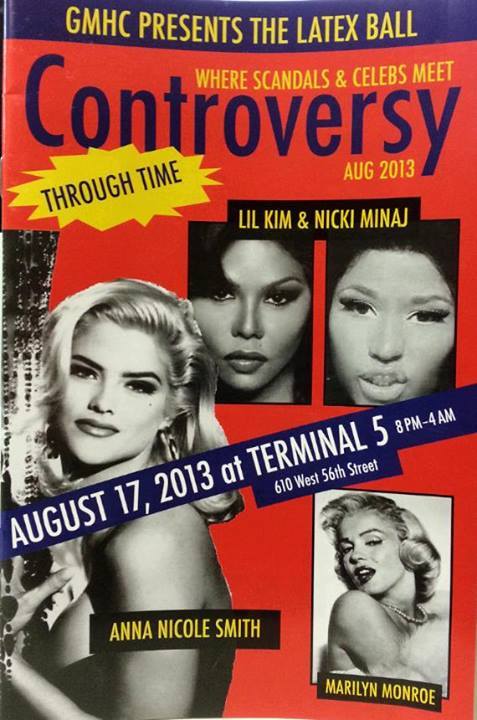
LATEX BALL 2013
2013 LATEX BALL CATEGORIES
Performance
Realness with a Twist-The Stonewall Riots $200
The Stonewall Riots was a historic movement in a community wanting to be accepted and treated equally as their fellow New Yorkers. On June 28, 1969, gay and trans New Yorkers fought back against the NYPD in a single moment that would change an entire nation. Tonight for your tens come as a police officer with a sign protesting against a fellow competitor who you feel should not be walking Realness with a Twist. For your battles come back dressed as one of the protestors of the Stonewall Riots (Gay and Proud).
Old Way .vs. New Way-Pop Art Censored
Though Pop Art was said to have started in the early 1900s, it wasn’t until the arrival of artists like Keith Haring and the Prince of Pop Art himself Andy Warhol where their work became truly controversial. Tonight, Old Way use Andy Warhol’s work as an inspiration and New Way use Keith Haring as inspiration for your effects.
BQID .vs. FQ Performance- Identity Thief of a Female Rapper $200
Rap and controversy in the mid-1990s belonged to one individual alone Lil’ Kim. With her scandalous outfits, raunchy lyrics, and constant appearance on magazine and tabloid covers, Lil’ Kim was definitely the Queen of Female Rap. However, in 2010, the world started to become familiar with a new Queen of Rap, Nicki Minaj. Nicki like Kim has the avant-garde outfits and appearances some say mimics Lil’ Kim’s to the T. It became so tense that the two even began to record dis-tracks. Tonight FQs bring it as Lil’ Kim and BQID as Nicki Minaj, let’s see who really sits on the throne.
Women’s Performance- The Ice Queen $100
In 1994, the USA had women’s figure skating on lock with stars such as Kristi Yamaguchi, Tonya Harding and Nancy Kerrigan. The three held gold, silver, and bronze medals in the prior Winter Olympic Games and planned on doing the same in the 1994 Winter Olympics. However, while training Nancy Kerrigan was brutally attacked by an individual who was connected to rival and teammate, Tonya Harding. Tonight bring it in a look inspired by a Women’s Female Figure Ice Skater.
Face
BQ Face: The White Glove $100
The Iconic Michael Jackson is known as one of the most influential person in music as well as one of the most controversial due to the many of false allegations that he was charged with over the years. Tonight, we want to end the allegations by having BQ Face children create their carta without paint. Tonight come in any look you would like. However you will be asked to wear a white glove just to wipe your mug---if accused.
FQ Face: Diamonds are a Girl’s Best Friend
Marilyn Monroe is said to have been one of the most controversial women that has ever lived. She is known for her sexy and seductive aura and for her many diamonds she received as gifts from her male friends. Tonight inspired by Marilyn come glamorously done, but don’t forget your diamonds.
Women’s Face: Missed Miss America
In 1984, Vanessa Lynn Williams was crowned Miss America. Vanessa was plagued with hate mails and threats from her being the first African American Major Beauty Pageant holder in the USA. Yet her most startling threat came later that year when Penthouse Magazine released a statement that they were going to publish nude photos that she has posed for. Eventually, Vanessa resigned her title due to funders who threatened to pull out of the Miss America franchise. Tonight as the beauty queen come with a crown and sash.
BQID Face: Studio 54
From the lights to the music, to the crowd, and the scandals, Studio 54 night-club is known as the one of the best Disco clubs of America. Tonight we want you to take the look of Studio 54 night-club goers and to turn it into beauty by infusing the story of Disco into your makeup and outfit.
Realness
Butch vs. Trans-Man Realness: Sammy the Bull $100
When it comes to the Mafia, controversy seems to always follow. However, one thing that is not tolerated in the Mafia is a RAT a/k/a informer. On November 11, 1991, John Gotti and the Gambino crime family learned that their underboss known as Sammy “the Bull” Gravano had become a FBI informer. Tonight, we would like Butches dressed like a Mafia Lord and Trans-Man like a FBI Agent.
FQ Realness: The Blue Dress in the Oval Office
Who can forget the controversy surrounding President Bill Clinton and Monica Lewinski? Tonight bring it in a blue dress but make sure there is no stain to get you clocked.
Drags Realness: Amy Fisher
Young, gullible and in love is what drove Amy Fisher to commit a heinous crime against Mary Jo Buttafuoco. Tonight, the love of your life is simply realness and you’re taking shots at anyone who dares. Dressed as a high school teen girl, bring a picture of your rival who you wish to shoot down with realness.
Big Girl Realness (BQID vs. FQ): Bloomberg’s Plan vs. The First Lady’s Proposal $100
Mayor Bloomberg has put a stop to the purchase of any soda beverages more the 24 oz. at local businesses mainly fast food restaurants to stop the increasing obesity rate in NYC. But on the other hand Michelle Obama decided to come out with work-out routines for her efforts to stop obesity. Tonight you are not going for it or any ban of that matter. Come in honor of your favorite fast food restaurant with props and all, and tell the judges why there shouldn’t be a band on anything…well your favorite food especially. Or come dressed in work-out gear to show that you are into keeping healthy.
BQ Team Realness: Gay’s in the Military: Don’t Ask, Don’t Tell! $300
Tonight we are looking for 3 different types of BQ Realness, from 3 different houses, representing 3 different branches of the USA military. In honor of the former “Don’t Ask, Don’t Tell” policy each member must be unclockable, for if not, your team will be discharged from the battle zone.
Runway
Female Figure Runway: The Runway Rivalry $100
In mainstream fashion there is said to be only room for one black female top model. For years we have seen Naomi Campbell wear the crown of the Queen of Runway. Yet, some will disagree and claim that the Queen of Runway is Tyra Banks and not Ms. Naomi. The disagreement even begun to surface between the two models with shade and reads. Tonight we would like to end our own battle of what gender really runs Female Figure Runway. Women vs. BQID vs. FQ
The look is totally up to you; however, the walk must be ovah.
All American Runway: The Traditional American Look vs. The Avant-Garde Look
When it comes to the different traditional American designers and the looks they want their male models to reflect, there is not much difference between the design houses. However, in the new era of things American designers have become more avant-grade and flamboyant with their styles and models. Tonight, you decide what side of the fence you stand on. Bring it in a traditional American look or an Avant-Garde Euro-American look.
Fashion
OTA Labels: IRS and The Stars
We have all heard the controversial stories about celebrities and their mismanagement of taxes. Tonight the star is not Lauryn Hill or Wesley Snipes, it’s you, and instead of tax receipts we want to see labels….really, the labels.
Best Dressed: The Fashion Police
Will your look be the next to experience Joan Rivers disapproval? Or will Kelly Osbourne go crazy over your style?
Bizarre: The Call Me Now Gimmick! $100
Ms. Cleo fooled us all once we found out that her zodiac psychic readings were not only wrong but untrue. Tonight using the zodiac as your muse, show us that your prediction of winning bizarre at the Latex ball is not a gimmick when you captivate the judges and destroy your competitors.
Sex Siren and Body
BQ Sex Siren: The Calvin Klein AD $200
In the 90s designer Calvin Klein and his sexy male underwear commercials were TV censor organizations’ main target. Tonight we would like for you to revisit the original commercials and bring us that classic Calvin Klein look.
FQ Sex Siren: The Playboy Mansion
Hugh Heffner’s home is known for many scandals, controversy, and if not anything else the sexy playgirls that flood his mansion. Tonight bring it as a sexy Playboy Pin-up.
BQ Body: Mr. Olympia
There has been controversy surrounding the Mr. Olympia Contest since the start of the organization. The majority of the controversy stems from the contestants and the use of steroids, which are not permitted to be used. Tonight, bring us nothing but body in the colors of red, white, and blue.
Women’s Body: Anna Nicole Smith
We all fell in love with Anna’s blonde-girl antics and her silly characters. But her millionaire husband fell in love with her luscious body. Can you make the judges fall in love with your body?
Mini Grand Prizes
BQ Vogue Femme & BQ Runway: The Military Draft (The Top 20 invitees)
The idea of a military draft is an ancient one, used around the world. In America, a form of a draft was first used at the start of World War One and most controversial during The Vietnam War. Under increasing pressure, Congress discontinued the draft in 1973, and the new, all-volunteer army began.
Tonight we will bring back the draft lottery to Ballroom by hand-selecting the Top 20 individuals of BQ Vogue Femme and BQ European Runway. Only these chosen individuals are allowed to compete for the BQ vogue femme and BQ Runway category. The effect is totally up to you. The catch is that there will only be one winner and the battles will be chosen through the luck of drawing names out of a hat.
BQ Vogue Femme Invitees: $500 plus $20 pot
Alex Mugler, Baby Hurricane Khan, Bambi Revlon, Bamzy Garcon, Boom Revlon, Bootz 007, Chaos Mizrahi, Chi-Chi Mizrahi, Dae-Dae 007, Divo Icon, Elzon Ebony, Justin Khan, Lil’James Khan, Lil’ Ronnie Aga, Lil’ Vick Prodigy, Lollipop 007, Magic Khan, Moo-Moo Ebony, Niama Mugler, Omari Mizrahi, Pumps Mizrahi, Salina Prodigy, Smiley 007, Tails Mizrahi, Tiny Aga
BQ Runway Invitees $500 plus $20 pot
Aliquon Pocotti, Boi-Boi Khan, Corey Chanel, Demetri Mugler, Dvon Garcon, Durrell Milan, Egypt Garcon, Giovanni Khan, Iman Aga, Iman Milan, Justice Aga, Kenyatta Xistence, Kwon Ebony , Lil John Khan , Meme Khan, Mini Me Milan, Oreo Mugler, Peppa Khan, Rodney Lavin, T.K. Chanel, Tez 007, Toxic Mizrahi, Tracey Prodigy, Trez Prodigy, Twiggy Garcon
Legendary Categories: The Controversial Win (Legendary FACE, RUNWAY, REALNESS & PERFORMANCE) $150 each
If you ask any legend of any category about a time when they should have won grand prize but didn’t due to shade, drama, or controversy, we guarantee you there will be a hundred stories. Tonight you are the legend and you are telling us the story of when you lost a ball that clearly you should have won. Recreate the look, bring the attitude and hopefully this time the ending of this story will be different--without all the controversy.
The Rise of a Generation: As a House Production (KiKi House .vs. Major House) $500
This year in the ballroom scene there has been controversy surrounding its future due to the popularity of the Kiki scene and the lack of participation of the new generation in the major scene. Many KiKi participants say that the major scene is shady and unfair, and they would rather just walk in the KiKi functions. On the other hand, many major scene participants feel like the KiKi is a waste of time and doesn’t really prepare its youth for the real scene. Tonight as a house, showcase to the audience scene your talents by presenting a production that includes 1 Runway, 1 Face, 1 Realness, 1 Fashion and 1 Performance. The production must include a message tackling the issues of the Ballroom community (for example; HIV/AIDS, violence, homelessness) and how your house will help in its resolution.
Latex Ball Facebook page
SUGUR SHANE [Qween Beat/Got Rush Ent] interview
Part three in an ongoing series on upcoming children.
THIS BITCH RIGHT HERE! One of the first people ever to reach out to Cunt Traxxx in the early days, it seemed obvious to ask Shane when I needed a vocal for my debut EP. A real all-rounder, I sent his busy ass some questions to catch up, and to introduce him to the CVNTY readers...

Who is Sugur Shane?
Sugur Shane is an artist, but to break it down, a rapper, house vocalist, and DJ. In any case, not to be confused with a commentator or ballroom artist. Just wanted to clear that up, the mixtape has made some new Sugur Shane fans and they sometimes think I’m just ballroom.
I
have a few. 90’s music is a big one, Lil Kim, Gillette, and Biggie. I
actually wrote my first rap to Biggie’s Warning. Gillette & 20
Fingers brought the nasty side of it and also enabled me to mesh the
genre’s together. As far as house music, Peter Rauhofer & Junior
Vasquez were the sole contributors to that influence.
I
love all aspects of making music. The photoshoots are fun, Production
fun but draining, DJing can be cute, but the ultimate high is
performing! I love performing, its better than any drug.
I
was first introduced to the ballroom scene by my gay mother Princess
Magnifique Royalty. I met her randomly actually when I was at Spirit
Nightclub in New York. We clicked instantly and she has been my family
ever since. Even with being introduced into the scene and having a gay
mother; I still never really became too invested into the ballroom
scene. I always checked it out here and there but kept my distance.
Well of course we have my debut mixtape My Night with Peter & Junior!
Which is not going away; Everyone keeps asking me about another
mixtape. The mixtape still has a lot of ground work, so we are still
pushing it. Aside from that I have some exclusives that dropped: Sexy Heels, Club Kid Cunt, Imma Read 2013 Remix with Queer Hiphop Artist DT. I also have my monthly Sugcast which is a tribal circuit house podcast on Soundcloud.
I
can’t speak on the ballroom scene too much, because I’m not that
involved. In my opinion the whole scene is starting to be watered down
and taken over by vogue fem. I don’t feel like it’s a respected craft
like it once was either; It’s not like it use to be. The only difference
between the scenes is that it is a lot more dangerous here. Our monthly
balls are in the hood, so you always come prepared. I’m not totally
talking out of my ass either, because the true legends of vogue would
agree.
Life
experience. As I stated Biggie was one of my influences and he was a
great storyteller. There’s always something that I may be going through
at the time that comes out in my music. Like I said recently I stay
Taylor swiftin guys in my songs as well lol. Lately it’s been the
hipsters ha.
I
have many projects in the works right now. A new house music single
coming out later this year. An EP in the works, of course more music
videos. Last but not least I’m working on performing overseas and all
over the U.S.
Sugur Shane on Soundcloud.
Sugur Shane's website Sugur Rush.
SUGUR SHANE Qween Beat Attack video:
And here it is, the Cunt Traxxx/Sugur Shane collab called “Drop", available as a free download, so GRRRRAB IT. NOW! Rest of the “Death Drops" EP is available to buy on Juno.
THIS BITCH RIGHT HERE! One of the first people ever to reach out to Cunt Traxxx in the early days, it seemed obvious to ask Shane when I needed a vocal for my debut EP. A real all-rounder, I sent his busy ass some questions to catch up, and to introduce him to the CVNTY readers...

Who is Sugur Shane?
Sugur Shane is an artist, but to break it down, a rapper, house vocalist, and DJ. In any case, not to be confused with a commentator or ballroom artist. Just wanted to clear that up, the mixtape has made some new Sugur Shane fans and they sometimes think I’m just ballroom.
How would you describe your sound?
My sound is dark, grimey and aggressive. Very in your face! You can always catch some shady lyrics in my art.
Who or what is your biggest musical inspiration?
What's your favourite part of making music - djing, performance, production, etc?
How did you get into the whole house/ballroom scene?
You're very prolific - tell us what releases you have just now…
How did the collab with Schwarz happen and are you happy with it?
He
hit me up a few days after I followed him on soundcloud. I live for his
production so when he hit me up I was immediately down. Our collab Club
Kid Cunt is one of my favorite tracks. That trance kick with the ha did
it for me. I wrote that track within a hour, that’s when you know I’m
truly feeling it.
You play a lot in your native Philly - how is the ballroom scene outside of New York at the moment? Is it different from NY?
What has been the biggest influence on you besides music?
What's coming up in the near future for Sugur Shane?
Sugur Shane on Soundcloud.
Sugur Shane's website Sugur Rush.
SUGUR SHANE Qween Beat Attack video:
And here it is, the Cunt Traxxx/Sugur Shane collab called “Drop", available as a free download, so GRRRRAB IT. NOW! Rest of the “Death Drops" EP is available to buy on Juno.
Labels:
commentator,
dj,
house music,
interview,
MC,
Sugur Shane,
upcoming children,
vogue
Subscribe to:
Posts (Atom)