Showing posts with label queer. Show all posts

Friday, 30 August 2013

DJ SPRINKLES in-depth interview part 3

And so we come to the final part of CVNTY's epic interview with Terre Thaemlitz aka DJ SPRINKLES; artist, lecturer, highly respected deep house producer, and someone with more than just a passing interest in trans*/queer/gender issues. In this part of our epic sit-down, courtesy of the kind folks at Arika in Glasgow, we talk about Terre's history in activism, more on the difference between political organisation and activism (especially in relation to being trans*), how Terre got her start in the world of voguing and ballrom in early 90s New York, and the complex effects of "Paris Is Burning" and Madonna's "Vogue" on that world and its people: 


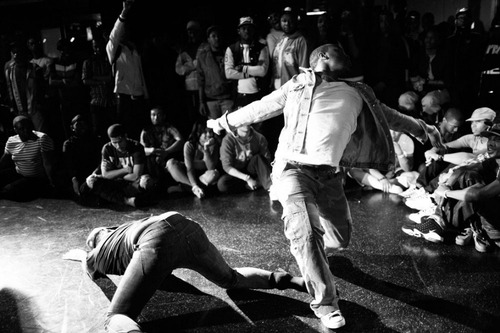
 Sprinkles in action at Arika Episode 5, Glasgow, photo by Michael James

I think we agree in that we recognise that there is a political element to everything, but I feel "activists" can often come across as quite patronising...

Well part of that is because most people don't want to hear another person telling them how to live, and if the thing they are being told is not something they are personally invested in, it becomes just one more cultural demand. Most cultural commands are coming down from a position of domination, but I think people find it easy to mis-direct anger at activists because everyone is already so beaten down and alienated from each other under capitalism. Any self-conscious social organizing initially registers as annoying, because we are conditioned to respond to it as inappropriate and anti-social. This is all assuming we're talking about left-wing activists we would hypothetically like to embrace, as opposed to right wing radicals whom I think are patronizing in completely different ways via their amplification of mainstream cultural dominations. I think, again, it comes down to an inability to distinguish what is political organising versus activism. Organising does not always mean sitting on a committee in a room inventing rules and protocols. It could also be as familiar and seemingly innocuous as the structuring of lives within familial units. These are also political organisations. Constructing "family" is one of the most common organisational frameworks in the Ball scene, right? So, how do we learn to fathom all the seemingly innocuous aspects of our lives as forms of political organisation? If people can get in touch with that, then I think a lot of the "anti-activist" resistance to political engagement fades away because we realise political engagement is not just some external imposition by others. It's something we are doing, hearing, speaking and teaching all the time within daily life - often unwittingly. So that's what I would offer to someone who feels that frustration [with political activism]. 

I think genderfuck is a good example of that because I don't fell like it's overtly political, but I think the act itself is political because it is going against society's dominant, patriarchal ideas of gender. To me it seems like a very simple, direct way of doing something political without having a bullhorn. 

Actually I am shocked that you are phrasing it as not overtly political, because from my own experiences, it effects not just how people react to you on the street, it effects your ability to get work, it effects your ability to even buy things when people refuse to serve you… 

What I mean is not that it isn't political, as of course it is, it effects every aspect of your life. But what I am trying to articulate is that it doesn't fit into people's perceived notions of what "politics" is, which, as you mentioned, is people in suits, talking down to you, telling you how to live…

Well, maybe also because people perceive it as perversion, and therefore a personal choice. Within the public/private sphere that we have constructed so well around ourselves, this notion of choice is supposedly the indicator of freedom and de-politicised motion - basically, the opposite of activism. I think genderfuck doesn't register as traditional "politics" because it is seen as our "choice" to do genderfuck, simultaneously announcing and inhibiting our free movement within public spaces. As an action, it blurs the lines between "public" engagement and the perhaps shameful disclosure of something usually kept "private." I mean, most people think of "public spaces" as a forum for the political, whereas what happens in our bedrooms is considered private, "fuck you, it's my business and you have no say here." But in fact what happens in my bedroom IS directly related to what is not socially able to happen elsewhere. Much as the politics of the public fill private spaces, genderfuck seems to bring the politics of the private into the public. So yeah, there is that whole public/private thing of seeing genderfuck or certain other forms of transgenderism in relation to perversions, choices, illnesses to be treated, etc. - not standard political disourse. Of course, the minute we say these things we realise we cannot separate them from real material struggles. It's impossible. Especially when you are talking about perversion and illness. These are morally and politically laden terms. 

Right, we have been talking for over half an hour and we haven't discussed voguing or your roots in New York! I should probably start by asking how you got into that whole world? How did you discover voguing and ballroom? 

Ok, well I was doing activist work in NY in the late 80s. I guess it was around 1988 that I did a mix tape for the API contingent of the Gay Pride parade (API stands for Asian Pacific Islander, my partner at the time was one of the founders of the API Caucus at ACT-UP). I started DJ-ing at benefit events, and out of that, I started getting DJ gigs. I got a DJ residency at Sally's - actually Sally's II - which was a notorious midtown sex workers club at the Carter Hotel on 43rd St. It was a really different scene from the [East] Village, from the 'art queen' type of scene. Sally's was a place where there were sometimes balls, but mainly I worked two nights a week with Dorian Corey, and another night was with Miss Sherry from Las Vegas. So that was such an amazing thing - to be so young, in my early 20s, and working with these icons… I mean Dorian Corey [star of "Paris Is Burning"]… she really stood up to her legend! But because Sally's was very much a "post-op" scene, and Dorian and a few others were in their 60s (there were many first wave transexuals around), I also had a lot of early exposure to people in all different stages of life and transition. Not just people who were young and good looking and had the right surgeons, but also people who had been living for decades with implants. Of course, a lot of things are done on tight budgets and go wrong, so this is when I also came to conclusions on my own that I would remain "non-op". Based on not only the economic suffering I saw people getting themselves into, which is really like mortgaging a house (and a lot of the girls were homeless), but also just the general health difficulties I saw people getting into. I saw the different effects of aging on transitional procedures, that I think a lot of people don't see. And heard a lot of stories of health troubles from girls whose treatments had lapsed or were sporadic for years at a time, due to a lack of finances and health insurance. Although I worked full-time during the day as a secretary, I also had no confidence in the financial security of my own future, so it was a really intense experience for me, at a point when I really needed to make certain decisions about the course of my own life. 

How long were you at Sally's? 

I was DJ-ing there between 1991 and 1992, but it was probably around a six or seven month span. I got the Sally's II Grammy for Best DJ in 1991 in January or February of 1992, and then a month later I was fired because I refused to play a Gloria Estefan record! This was because it was requested by a big-cash John. So, Sally pulled me aside and said to me, "You gotta start playing Madonna and the Pet Shop Boys, and more of that stuff". At the time I was only playing underground house from New Jersey and the Lower East Side, mostly instrumental stuff, so I said "No, I''m not gonna play it," and she said "Well I'm gonna have to let you go". I mentioned that only a month earlier I had gotten the underground Grammy, so I couldn't be doing that bad, and she said, "Well, the girls voted you best DJ, but the Johns pay the bills." And that right there sums up a lot of my scepticism about how certain parts of ball and vogue scenes preach that it's all about acknowledgement and visibility and being named and breaking through. I mean, for me as a transgendered person, what better acknowledgement could I have had than being voted Best DJ by the girls themselves? Yet the Mother of the House Of Magic herself, Sally Maggio, then almost immediately turned around and invalidated that acknowledgement from the girls. Those two conflicting dynamics are tied up in the award. And that's why I hype it up on my website still, not because it is the symbol of some great achievement - which I realize is how most people will simplistically perceive it. For sure, mentioning the award after it was basically invalidated is like a "fuck you", ha ha! But in many ways it symbolizes the complete opposite - hypocrisy and even shame. At the same time, for those who understand the nuances of those kinds of situations, I don't want that "invalidated" initial meaning to be totally erased. It's very bittersweet. So yeah, the real reason I bring that story up is because it represents my concerns about how most people rely on representational strategies whose value systems are almost exclusively rooted in acquisition and visibility. Of course, the ball scene has a very long history with problems of exploitation, mis-representation and commodification, and those abuses are interwoven with very deeply rooted desires for acceptance, acknowledgement and visibility. The general tendency is to maintain face, and identify those problems as solely coming from without. But, through the internalization of violence, those problems are also part of the very practices through which the ball scene self-organizes. That award story kind of sums up the hypocrisies I think many people are struggling with in the ball community. 

That's interesting, because the period you were djing at Sally's would have been around the time "Paris Is Burning" came out? 

Just after, I think. 

That film has a very mixed history: on the one hand it is a huge amount of people's introduction to this whole world of houses and voguing, but also a lot of people say it only shows you a very small aspect of this world, and it's not doing it full justice. Did you see any of that in your time at Sally's? 

I think one of the problems of how people deal with representational issues within house communities (also, of course, within histories of racial and gender discrimination) is that it's easy to slip into a belief that representation can occur in an unbiased and fair way. Of course, every representation is a deception, and who should know that more than drag queens? So did I see it? Yeah of course I did, and at the same time I was actively arguing with queens who wanted me to play "Vogue" every night. It wasn't as though the scene as a whole had its shit together and knew all the problems with "Paris Is Burning" and Madonna's "Vogue" or whatever. There were people who were on the ball with that stuff, and I'd like to think that I was maybe one of them. But at the same time, there were a lot of people who really wanted to participate in that pop moment and celebrate it, simply because any visibility registered as good visibility. It's a kind of juvenile fandom fantasy, you know? So, in any representation of ball scenes, the question then becomes, "how does one really map and represent complexly overlapping communities that deploy languages of authenticity?" That authenticity can be tied to what kind of transgendered person you are, for example post-op realness versus butch queen realness versus a total train wreck person like myself. And, of course, authenticity in relation to issues of race, of class, etc. So, if that is the kind of language that's going on (and this was in the 80s and 90s, when identity politics with an essentialist twinge was in its heyday) how does one actually represent more complex relationships of community? And even myself, being someone who is White in a Latina and African-American club - if you want to boil everything down to essentialist race relations, what the fuck was I doing there, right? Well clearly that is not a very nuanced way to understand social relationships that bring people - even unexpected people - into specific spaces. It leaves you speaking of identity as a claim to territory, rather than speaking of social movement, interaction, organization, domination and violence. So I think unless you enter very precise conversations about why particular things failed or succeeded in terms of media representations, then the boundaries of that conversation becomes too broad and fall into sweepingly essentialist categories.

Terre Thaemlitz "Meditation on Wage Labor and the Death of the Album" (Sprinkles' Unpaid Overtime) 


Find out more about Sprinkles/Terre (and buy her music!) at Comatonse Recordings


Much thanks to Barry, Bryony, everyone at Arika

Friday, 2 August 2013

My GAY BARS piece for Dalston Superstore

I was comissioned by Dalston Superstore, roughly at the time of the Stonewall riots anniversary, to write a piece about people's favourite, or most historically important, gay bars. After thinking about America and Asia, in the end I decided to stick to continental Europe (and London), with gay haunts chosen by Daniel Wang, Hard Ton, Silvia Prada, Kiddy Smile and Feral aka MC Kinky. That means there may be a sequel looking further afield soon, maybe, and next week DS are going to publish the run down of our favourite fictional gay bars in film and TV.


Oh, the good ole gay bar! Love them or hate them, gay bars have been an integral part of LGBTQ social life since the beginning of time. Not always just a space for cruising and dancing, the gay bar/gay club has also been a vital tool for queers to define themselves and the kind of people we wish to be, the kinds of people we wish to interact with (for better and for worse) and, ultimately, the kind of lives we wish to lead, away from harassment and hetero-normative judgement.

Gay bars have also acted as a reflection of society’s acceptance, or lack of acceptance, of LGBTQ people, and our own increasing visibility in mainstream society. From New York’s Stonewall Inn (site of the Stonewall riots in 1969, the event which kicked the modern gay rights movement into existence) to Manchester’s Manito (the first bar in the city’s gay village to feature see through glass in the windows, ending the traditional stigma and shame of being seen in a gay bar) to London’s Admiral Duncan pub (which was horrifically nail bombed in 1999 to huge public outrage), it seems as though all of gay life could be traced through our pub and club spaces, and our interaction with, and within, them.

Although not always positive – very picky door policies have led to claims of exclusion and division among queer communities – gay bars and clubs are hugely important to this culture. As it was recently the anniversary of the Stonewall riots, we thought it was high time we celebrated the humble gay bar, so we’ve asked five of our favourite queer dance acts and DJs from around Europe to name their favourite gay bars for us. This isn’t a definitive guide however, consider it some insider tips for homos, don’t-knows, anything-goes and friends/allies to brighten up your next continental jaunt.

Read the rest of the article here.

Saturday, 1 June 2013

Welcome to the Ballroom, where Voguing is always in style

Originally published by BoingBoing.net, March 2013.


Mention the word "voguing" to people, and generally their first reaction will be “strike a pose, there’s nothing to it". A dance fad made popular by Madonna in the early Nineties but invented in the New York City gay underground years before, voguing faded into obscurity as quickly as it popped into the mainstream. It’s good for nostalgic giggles, though: we’ve all seen that clip of "Vogue Boy" voguing in a shopping mall. But what if I were to tell you—like a big, gay Morpheus—that vogue was not a short-lived fad? Voguing is now part of a complex, diverse, fully-formed and constantly evolving underground culture called ballroom.

To be clear, “ballroom" takes it name from the venues in which the “ball" events take place, and is not to be confused with the “strictly" kind of ballroom. Like hip hop, ballroom encompasses many different elements of artistic expression, from music and language to clothes and design, and, of course, dance. It deals directly with some of society’s most controversial issues, namely sexuality, race, class, gender roles and expression, beauty modes, self-definition and competition. It doesn’t do this in the polemical style we may be used to from punk and political hip-hop, however, where topics are theorised and discussed. In ballroom these issues are lived and experienced, as a vast number of those taking part in this underground scene are transgender, working class, people of colour.

Ballroom includes society’s most marginalised: minorities within minorities within minorities, for whom voguing and ballroom culture is an important resource. In a world where they have been rejected, ballroom not only accepts these people for who they are, it celebrates them, in a variety of unique and different categories. The competitive, prize-winning aspect of ballroom gives some participants a sense of worth lacking in the “real" world (not to mention money), and the familial structure of the “houses"—mother, father, sister, brother—often acts as a real surrogate, as many in this world have been disowned by their biological families.

Here, voguing is not just a dance, and ballroom is not just a genre. It’s a way of life that brings pride, peer recognition and self-respect. The genre of music is one thing, but the culture which surrounds it is another; and both are intricately tied into one another.
"Ballroom is a competition where you have houses (teams) that compete against each other, much like a sports team, except the competition in fashion, dance, runway, modelling, creativity and other categories. It is still usually an underground thing attended by people in the scene, though some outside the scene get glimpses of it. It is hard to follow unless you actively participate in it, or attend these functions." — DJ Vjuan Allure (Elite Beats)
"Ballroom a long running culture of pure underground talent. A place where people can come and express who they are or who they want to be and not be judged by the outside world, it is a thriving community of greatness and an open outlet for many talents." — DJ MikeQ (Qween Beat)
To quote the late, great Willi Ninja, who is perhaps the greatest voguer the world has yet seen, voguing is like a challenge dance: instead of fighting you take it out on the dancefloor. Depending on who you ask, this uniquely stylised dance form arose either amongst the inmates of Ryker’s Island, or at gay Harlem dance parties in the sixties (it’s most probably a mixture of both). Voguing got its name from Vogue magazine, as the competing dancers would flip to pictures of models posing, and imitate them, trying to outdo each other in the process. As it developed the dancers became quicker and more agile, and incorporated other forms of dance such as waacking (high speed arm movements and hand gestures) and body popping (though some say that voguing actually pre-dates popping, and was itself an influence on the original b-boys). Fast forward to 2013 and voguing has come a long way, progressing through the styles of old way, new way, femme and dramatics, to today’s almost hyperactive, turbocharged version of the dance. Although key elements of old way voguing remain (posing, “face"), a much more frantic and stylised choreography takes precedence, with signature moves such as the dip (when a dancer falls flat on their back), the duck walk and hair control (using long hair as stylistic element of the dance, in essence whipping it back and forth).

Then there is “runway" which is both the term for the space on which vogue battles usually take place at a ball (though they can also happen in a designated space on a busy club dancefloor) and a category in and of itself, based on traditional fashion runway modelling. To compete at a vogue ball is most often called “walking" and walking runways is not all about dancing. The “face" category means exactly that: who has the best looking face. Male and female modes are described as “butch" and “femme", though pretty much everyone is a “queen", and the ability to pass convincingly as something you are not (a straight thug, a biological woman) is called “realness". So "Femme Queen Face" is a category for those with the prettiest feminine features, while "Pretty Boy Realness: Andre 3000" requires competitors to look and act as much like Andre 3000 as possible. While traditional beauty modes are aspired to by many in ballroom, it is not exclusive. There are categories for the plus size, with some of the most popular voguers being “big girls". The categories at balls are labyrinthine, I can’t possibly cover them all here. There’s just not enough room, and honestly, I don’t truly understand all of them myself yet. The general ethos of ballroom, however, is essentially “be yourself" and “work with what you’ve got".

As these terms and categories suggest, voguing (and ballroom culture in general) is highly feminised. Males are regularly referred to as “she" and many “butch queens" perform “in drags", while some butch queens go further with their gender expression, and through the process of gender re-assignment, become “femme queens". In fact, “Vogue Femme" is generally how the current, athletic style of voguing is classified. This is in stark contrast to the hypermasculine, heteronormative and often misogynistic modes of mainstream hip-hop and the dance cultures that surround it. But make no mistake, just because it is feminine, does not mean it is in any way weak or passive. No, quite the contrary, vogue femme is decidedly aggressive, in your face and challenging.

Ballroom culture and voguing has become an integral part of the black gay urban experience, even though it is not quite recognised as such by the mass media (where, ironically, voguing’s influence is very strongly felt in styling and dance). Perhaps the celebration of the feminine and the queer goes against mainstream modes of how “hip-hop" (and by extension “black culture") is sold to a white audience, but ballroom serves as an important rights of passage none the less. While preparing this article I emailed the house music vocalist Shaun J Wright (a Chicago native who has worked with Hercules & Love Affair, Kiki and Stereogamous) to ask about his own personal experience of the ballroom scene. His answers are brilliant and articulate (I hope to publish this full interview with Shaun some time soon) and go very far in explaining to outsiders how this scene works and what it can mean to the participants:
"My entry into the ballroom scene was quite lengthy. I was familiar with some of the elements of ballroom culture because I would sneak into black, gay clubs in Chicago when I was 15. There would be vogueing and runway battles occurring in the club but I didn’t attribute those things specifically to ballroom. Around the same time I viewed "Paris Is Burning" and it helped me to make connections between what I was seeing in the clubs and the balls, which were still a great mystery to me. When I ventured to Atlanta to attend college I began to learn how to vogue by watching voguers in the club. I would test out my new moves and a few houses took notice.
I attended my first ball in the summer of 2001 in Chicago. It was a really crowded ball with participants from around the country and I was extremely impressed and also a bit confused. I still remember that night in a hazy manner. Though I had been clubbing for about four years by then, balls were something different altogether. The energy just swept through the room and I was never quite sure if my eyes were seeing the events as accurately as they were occurring. It would take attending a few more balls before I was able to process their intensely complex dynamics.
What left the greatest impression that night was watching Legendary Mother Leonard “Lisa" Escada Mugler (R.I.P.) destroy Butch Queen Face. I recall him walking to the judges panel and sending every other competitor on their way without a single vote. All I could hear from the commentator was, “1 Escada, 2 Escada, 3 Escada…". I decided at that moment that I wouldn’t even consider joining another house. I wanted to be apart of a crew that had that type of mother. I decided to join the House of Escada as most of my friends were already members and it felt like a natural fit."
Ah, Paris Is Burning. For all intents and purposes, this 1991 documentary feature by director Jennie Livingston is Vogue Culture 101, featuring as it does some of the original legends of the scene like Pepper La’Beija, Angie Xtravaganza, Octavia St Laurent and Willi Ninja, as well as some brilliant footage from various Harlem balls in the 80s. Paris Is Burning’s influence has grown much stronger and since its initial release, and the film has amassed a cult following like practically no other documentary I can think of (it recently topped a PBS poll of the best documentaries of all time, and by a very wide margin). The film has introduced a wide audience to the language, style, music and culture of vogue, though as Shaun Wright is keen to point out, it shouldn’t be taken as the be-all-and-end-all of ballroom culture. The 2005 documentary How Do I Look acts as a kind of riposte to Paris Is Burning, going further into ballroom culture and featuring some Paris Is Burning cast members who felt they weren’t portrayed fairly. The main source for modern ballroom footage is unquestionably the YouTube channel Ballroom Throwbacks, which has been grabbing and uploading candid footage of modern balls for a few years now. Also worth watching is The Luna Show, in which Butch Queen Face legend Luna Khan hosts some great short interviews with many stars of the ballroom scene, both upcoming and legendary. Luna’s not shy about asking many of the dancers to explain their gender transitioning process, and by seeking advice for any kids watching who may have similar feelings, The Luna Show acts as a valuable—if under-acknowldged—resource for the transgender community.

So to the music, which as I mentioned is intricately linked to the dancing, and shares the same in-your-face spirit. One of the most exciting things about the ballroom genre for me, as a producer and a dj, is that it is house music that has a real connection to a living, breathing dance floor. That’s something that has been lacking in the genre for pretty much a decade now, with its emphasis on a cerebral appreciation of “texture" and “space" (think cosmic and minimal, which seem to appeal more to stoners and k heads than to actual dancers). By contrast, ballroom is brash, complex and busy. It can get minimal at times, but with the emphasis still very much on the beat and the percussion, giving the dancers and battlers more than enough to work with. Importantly, it still has very close ties to its roots in New York-based soul/disco and 80s/90s drag queen/diva house. In other words, the original cultures that inspired it.

So how does ballroom music differ from traditional house? Well, while there is a steady kick drum similar to that of house and disco, there is a different feel to the rhythm, and it’s one that can be appreciated most fully on the dancefloor. Traditionally, house music is built up as layers of loops and rhythms created on drum machines and synths. Ballroom, like much American dance music which has emerged since the turn of the century, takes its cues not from steady loops but from rhythms punched out on the pads of an MPC sampler. This gives the music a more staccato feel, similar to the difference between a loop-based hip-hop track from the 90s, and a jerky, Timbaland/Neptunes-style production from ten years later.

Whereas house has a stepping rhythm, a “one-and-two-and-one-and-two" (which comes from disco and feels akin to walking), ballroom rhythms place less emphasis on the “two" and sound more like “one-and-ONE-and-one-one-ONE" (a rhythm more suited to punching or jumping, and which is perfect for a dance that requires landing in different poses in rapid succession). It’s a similar 5-kicks-to-a-bar rhythm to that found in Jersey Club music, which is a close relation to ballroom, and also Baltimore Club, though B-More places more emphasis on sampled breakbeats. That’s not to say that there is no snare. The emphasis on the “one" is often backed up by snare and clap patterns that accentuate every kick in a bar, the type also found in ghetto tech and trap, often using similar 808-based drum sounds. Snare patterns are an important part of the ballroom sound, and the dancers’ reaction to the music, as are large cymbal crash sounds, used by the dancers for posing and “dipping".
Unfortunately, I am limited by space to giving a short rundown of the top producers in ballroom (many of whom I have interviewed for this piece, and whose interviews I hope to publish in full at another time).. So here’s my brief, condensed guide to ballroom acts: DJ Vjuan Allure of Elite Beatz is the grandaddy of this whole scene, having started producing vogue beats in the late 1990s. A clubber since the age of 12, he was initially inspired by Junior Vasquez, but sites DJ Sedrick from Washington DC, with his more brutal, hyped and energetic style, as his main production influence. The foremost spinner of ballroom right now is DJ MikeQ, resident DJ at the weekly Vogue Knights party in New York (probably the number one destination for voguers outside of the bigger, less regular, ball events in the city). Last year MikeQ put out the Let It All Out EP on the highly respected Fade To Mind label, and is also head of the Qween Beat stable, home of many up and coming legends in the scene.

Another aspect of ballroom music is the commentator, who is basically an MC, though the style of MCing used in ballroom differs from pretty much any other genre. It often includes specific shouted chants featuring the names of popular dancers, as well as commands for them to do specific moves on the runway/dancefloor to be judged on, or specific categories for participants to walk in. To get a taste of what the aggressively camp ballroom commentating style is like, start with the YouTube channel of the legendary Kevin JZ Prodigy, who has hundreds of clips demonstrating his style, or check out the Soundcloud page of Divoli S’Vere. to see how producers are getting imaginative in the programming of chants.

Moving away form the already established legends, there s also a whole slew of upcoming talent bubbling away. Worth checking out are the Jersey-influenced productions of Beek, who has just released a new, self-titled four-track EP through Vibedeck, commentator/producer Sugur Shane (his new mixtape My Night With Peter And Junior can be heard here), and the genderfluid B Ames, who produces tracks at a frightening rate, and whose sound pushes vogue music in a different, more R&B influenced direction. Outside of the actual ballroom battling scene, the sound is becoming more and more influential, and can be heard in electronica acts like Ynfynyt Scroll (of the Track Meet parties and #FEELINGS label from Austin), the highly respected British DJ Bok Bok of Night Slugs (check out his remix of Grand High Priest ft Dajae) and CVNT TR4XXX from the UK (more on that particular act in a bit).

Like many other contemporary dance genres, ballroom has cultivated a very strong Soundcloud network of fans and producers, with remixes and new tracks appearing on the site at a very fast rate. And like many American urban/electronic/dance genres, ballroom has its own big signature tracks. The two most recognisable types of ballroom/vogue track are the “Ha", and the “Cunt". I’ll get to the cunt (or kunt or even ckunt, as it is spelled) in a little bit, but let’s start with the Ha.
"The “Ha" is a sample used by Masters At Work, taken from the movie Trading Places. The word “Ha" is in the record itself, accentuated with an effect called a “krash" (a hard hitting effect). So many tracks have used the effect the songs themselves become known as “Ha"-s. " —Vjuan Allure
"A “ha” is another form of vogue beat. There are a couple definitions for it, but one of the most common forms of it is when you transform a mainstream song, a YouTube clip, maybe a commercial or a TV show, and add it (sample it) or turn it into a vogue beat/track. " — B Ames
Masters At Work’s "The Ha Dance" is the basically the musical bedrock of the entire ballroom genre, and has been sampled and recycled countless times. Pick any clip of vogue battling to watch on YouTube, and the chances are that “The Ha Dance", or a Ha-sampling tune, will be the soundtrack. One reason for this is that the Ha/krash sound itself gives voguers a cue to do the signature vogue “dip" move of landing flat on their back, which, when done in conjunction with the music, can be very impressive indeed.
The “cunt" on the other hand, is a track which samples the word “cunt" by a commentator or MC, or samples the classic house track "The Feeling (Cunty)" by Rageous Featuring Kevin Aviance, in which NY clubland legend Aviance uses the phrase “county" to very dramatic effect. In contrast to the “Ha", “cunt" samples tend to be chopped up and spat out rapidly, relating more to hand or hair movement than dips or showcase moves such as balletic spins. As for the word itself, which is obviously very loaded with pejorative meaning, in the world of ballroom (and world of drag at large) it is used instead as praise.
"Cunt is not the derogatory word it appears to be. It is actually one of the highest compliments that someone can give you - meaning fantastic!" — Vjuan Allure
"Cunt is used when you are just feeling your best. Or if something looks or sounds great/amazing." — B.Ames.
There has been some controversy of late in the ballroom world, in regards to who or what actually constitutes “ballroom", now that the genre is gaining popularity and more producers seem to be jumping on the vogue bandwagon. That’s why I want to take a moment here to explain my own status. You see, dear readers, that “upcoming" UK act I mentioned above called CVNT TR4XXX (aka Cunt Traxxx)? That’s me. Want proof? Here’s a little cunty mix I put together for the #FEELINGS label.

I mention this not as a ploy for publicity, but to explain how the influence of voguing and ballroom culture has extended far beyond Harlem, and even the United States, at a time when there’s a lot of talk of outsiders infiltrating the scene and betraying one of its core foundations: realness. Being based in the UK, and not New York/New Jersey/Atlanta/America, technically I AM an outsider. However, house music has always been popular in the UK, and by dint of that, so has vogueing and the NY black/latino/gay/trans/drag underground. Cutting edge house was like pop music when I was growing up in the 80s and 90s ("Deep In Vogue" was one of the first singles I ever bought, and to this day it remains my favourite ever music video) so house music culture doesn’t feel alien to me, it IS my realness. “House" is how I describe what I produce and what I DJ, and seeing ballroom bring so much energy and excitement to this sometimes stagnant genre is a beautiful thing.

Yet while I have connected to ballroom culture most strongly because of the music, that’s not the element that has given me the most inspiration. You see, even though I have been producing music for the last 15 years, it’s only since I reconnected with voguing and ballroom that I feel my music has come into its own. Like those children walking runways, ballroom has taught me. Watching the dancers, seeing them work and thinking about their movements has given me real focus and purpose for creating my music. As I stated previously, ballroom is music for dancing to, and ballroom has reminded me of my primary focus as a dance music producer. It has taught me how to bring it, and how to reach my full potential. The personal importance of this for me is hard to explain on paper, especially if the reader has no experience of the challenges of writing or producing music, and even then in a much maligned, seemingly “throwaway" genre like house. Believe me when I tell you, though, that it is a spiritual thing.

Aside from making music, I’ve dj’ed at balls in London (Horse Meat Disco’s Vauxhall Is Gurning), Glasgow (The Fierce Ruling Divas Ball) and Manchester (Vogue Brawl). While us basic bitches might not match up to the status of the US children, what we are doing is being true to ourselves, and keeping it real. We’re showing a lot of love for the original pioneers and participants in New York and all across America, and even though our thing might look different, as long as it’s done with respect, honesty and love, that should be what really matters. At the end of the day, I’m not sure if we’re going to see another “Madonna moment" with vogue and ballroom culture crossing over into the mainstream again, mainly because I just don’t see who could take it to the charts but retain the credibility (Beyonce is the only one who springs to mind.) If that does happen, though, surely it should be the dancers/producers/designers/commentators/artists themselves who control how they are depicted and how the scene is represented? I will leave the final words, on the expansion and development of ballroom culture to the scene’s original pioneers:
"I’ll just say this: as in in anything, you have to learn what it is you claim to be doing. Go to a ball, see what the culture is like, see what makes it tick, where it comes from. Find out what the “feeling"/"energy" is that only comes from a ballroom. Invest time so that you are knowledgeable in what you’re speaking/showing. There is always somebody ready to call out a poser. Don’t be a poser!" — DJ Vjuan Allure
"If you’re going to refer to ballroom or try to be relevant to it, at least know your history. Know what you are saying, who, what, why, when, where and how. And feel free to attend a ball." — DJ MIkeQ